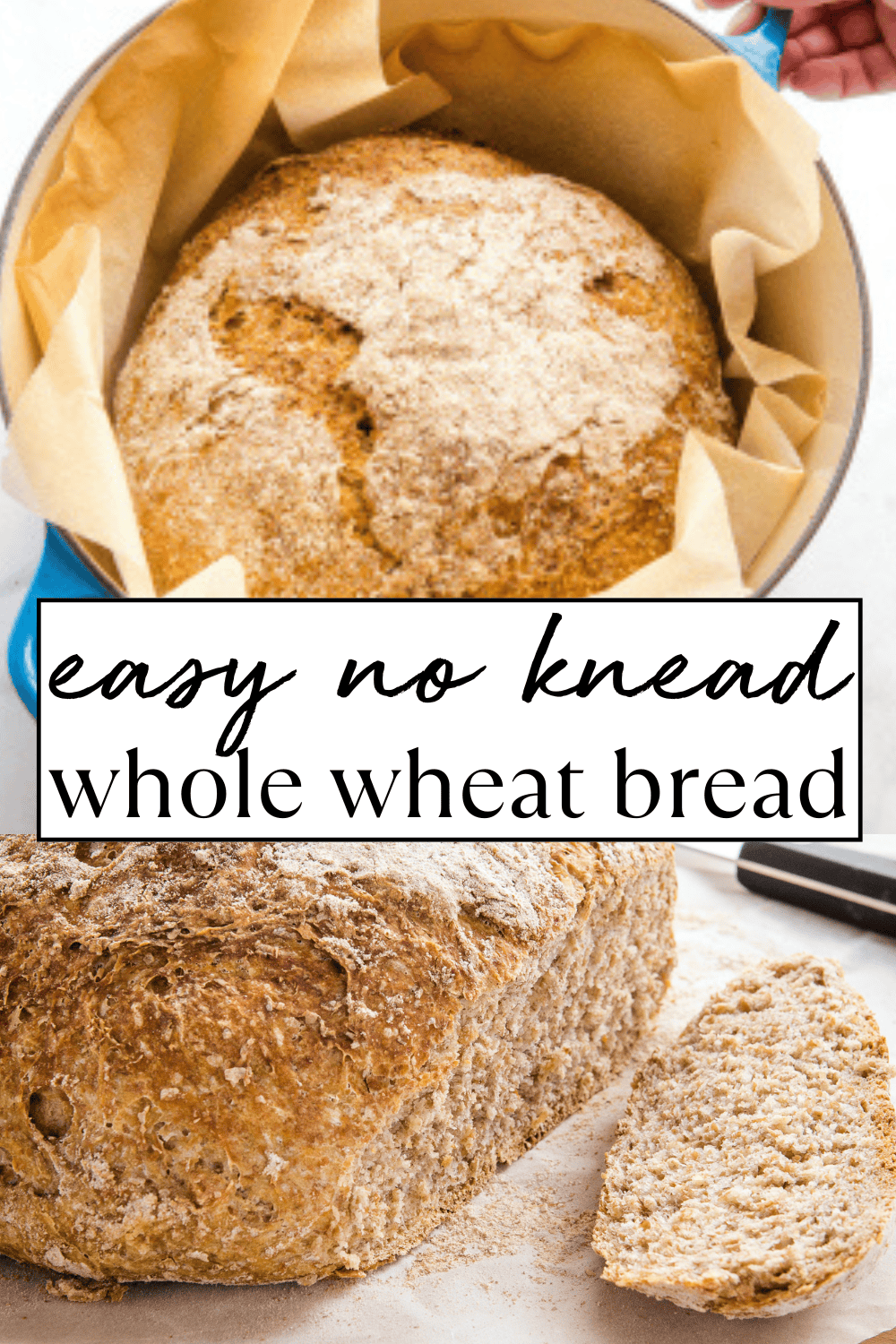
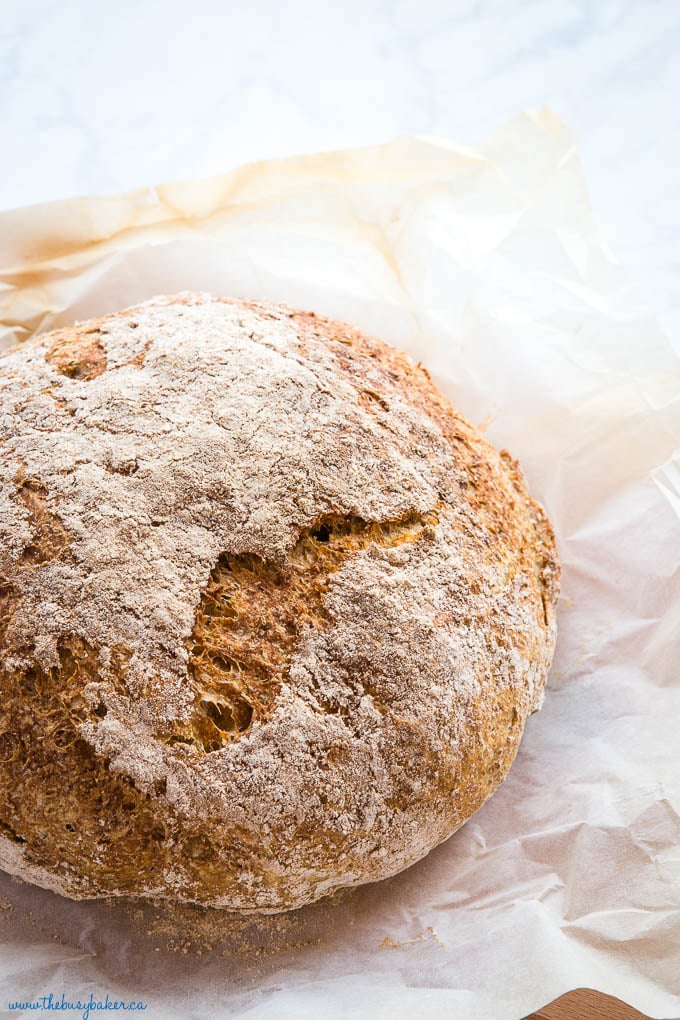
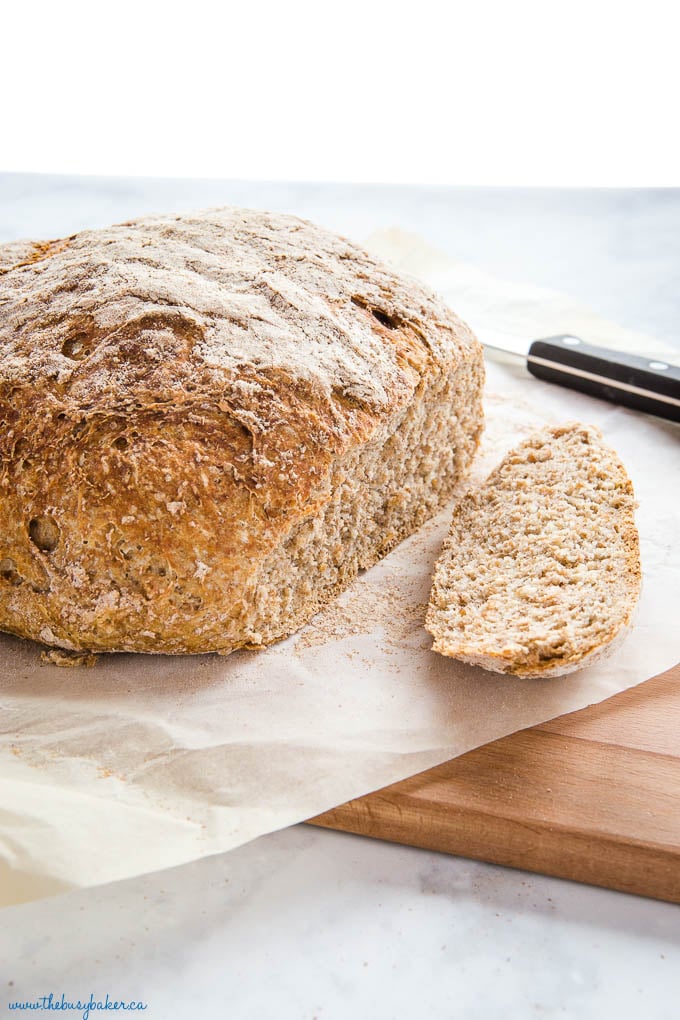
This No Knead Whole Wheat Artisan Bread is hearty, crusty, and easy to make with no kneading required. A simple whole wheat bread recipe with a soft interior and rustic crust.
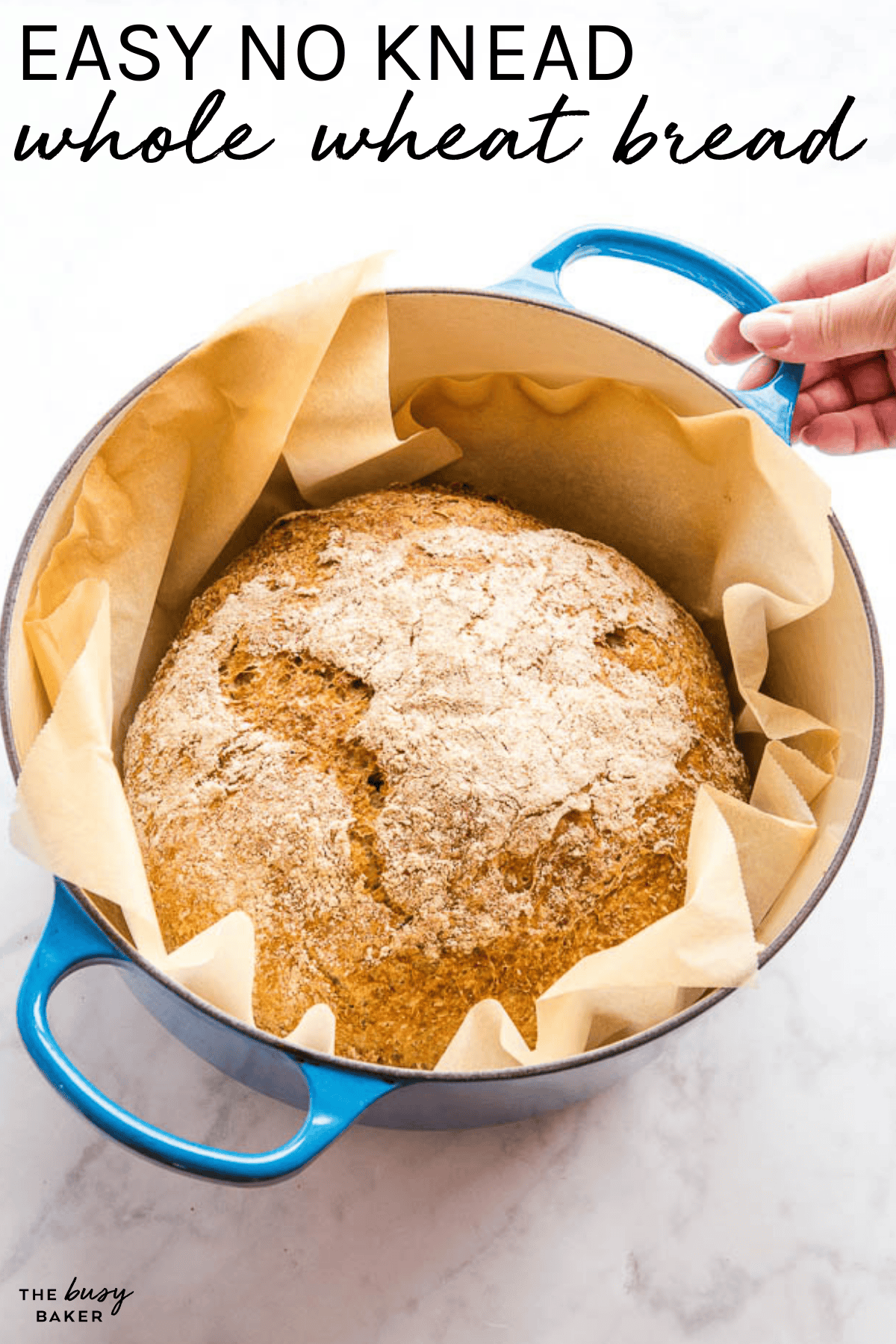
There is something especially satisfying about baking your own hearty, whole wheat bread at home. This No Knead Whole Wheat Artisan Bread gives you that same crusty, bakery-style loaf you love, but with the added depth and nutrition of whole wheat flour. It’s hearty, flavourful, and perfect for everything from soups and stews to sandwiches and toast.
Just like my classic no knead bread, this recipe keeps things super simple. There’s no kneading, no complicated shaping, and no special equipment required. The dough comes together in minutes and does the rest of the work on its own. The result is a rustic loaf with a crispy crust and a soft, slightly nutty-tasting interior. It’s a wholesome bread that’s oh so comforting!
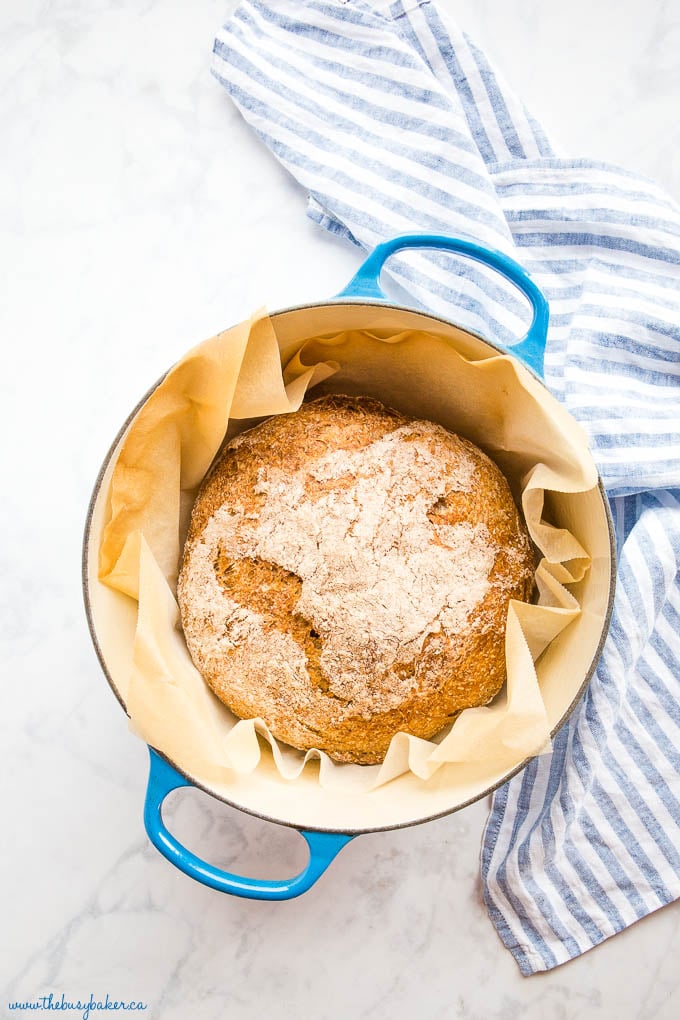
This recipe works so well because it uses a higher hydration dough and a shorter rise time to develop structure without kneading.
Instead of relying on long overnight fermentation, this quick-rise method allows the dough to develop enough gluten in a shorter amount of time while still producing a soft, sliceable loaf of bread. The dough is mixed and left to rise just long enough to become light and airy without becoming overly dense.
Whole wheat flour naturally absorbs more liquid and creates a heartier texture than white flour. This recipe accounts for that by keeping the dough soft and well-hydrated, which helps prevent the loaf from becoming too heavy.
The result is a loaf that’s wholesome and slightly nutty in flavour, but still soft enough to enjoy every day.
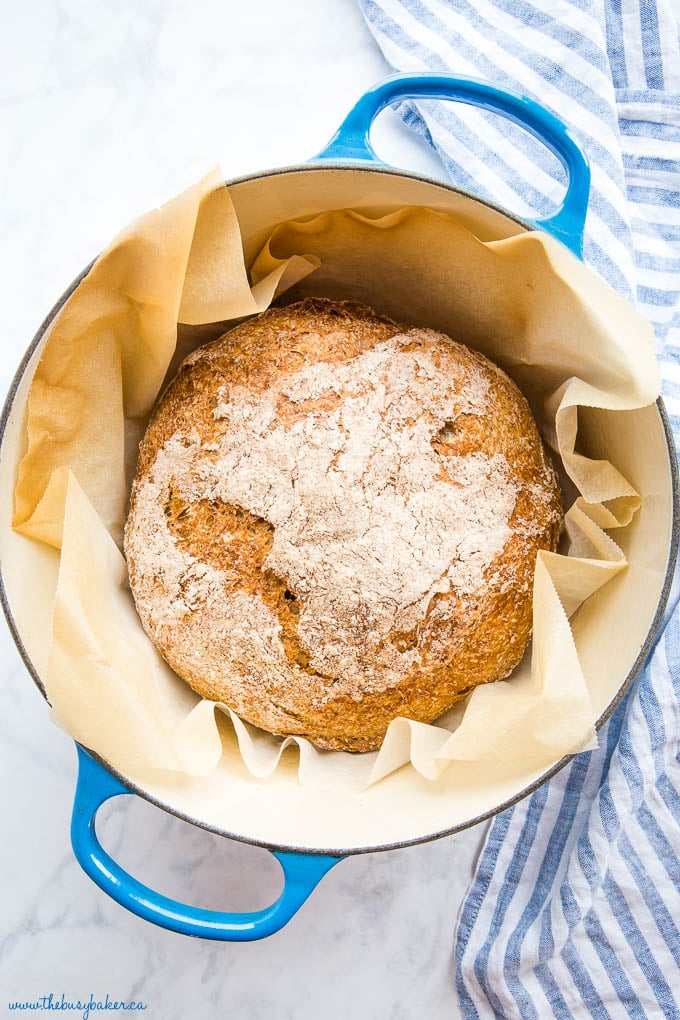
Whole wheat flour absorbs more moisture than white flour. The dough should feel soft and slightly sticky when you mix it.
Whole wheat dough will feel a bit heavier and less stretchy and soft. That’s completely normal.
Too much flour is the fastest way to end up with a dense loaf. To measure flour correctly for bread-making, aerate the flour by tossing it with a spoon or measuring cup in the bag or container to “fluff it up”. This prevents it from becoming too densely packed. Scoop your flour very gently with a dry measuring cup, making sure it’s nice and fluffy and rounded at the top. If you scoop too harshly the flour will become packed into the measuring cup, adding more flour than is needed. Simply use the flat side of a butter knife and scrape off the excess flour, levelling out the top
Even with a quick-rise method, the dough should look airy and expanded before baking.
Avoid pressing out too much air when shaping so the crumb stays light.
High heat helps the loaf rise quickly and develop a good crust. Preheating your pot will go a long way to helping the bread develop that crusty exterior!
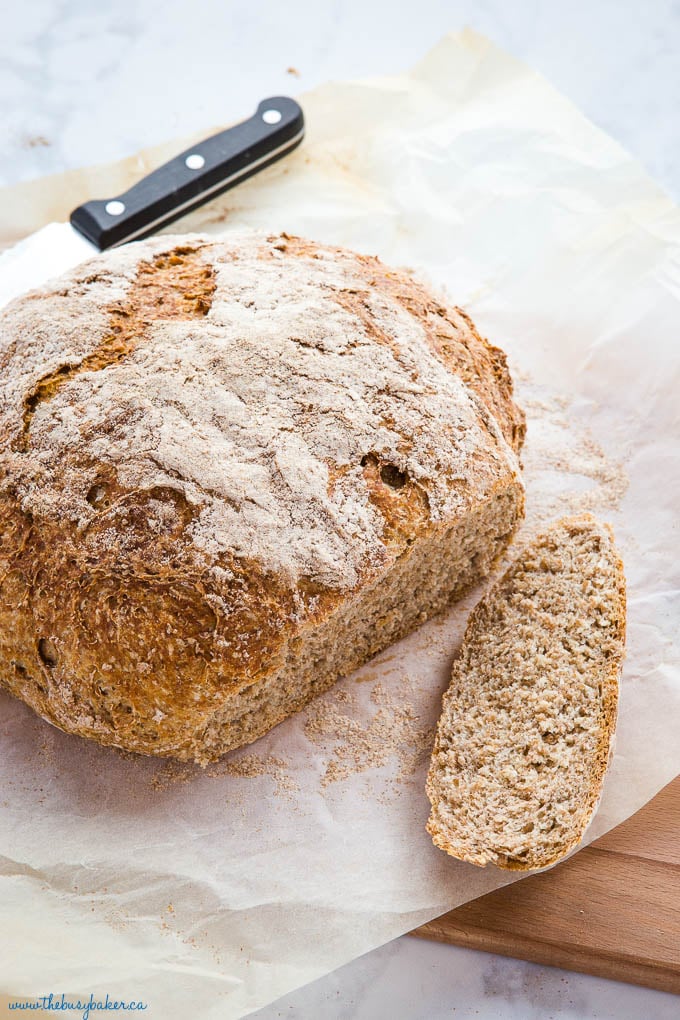
Whole wheat bread needs time to set before slicing to avoid a gummy texture.
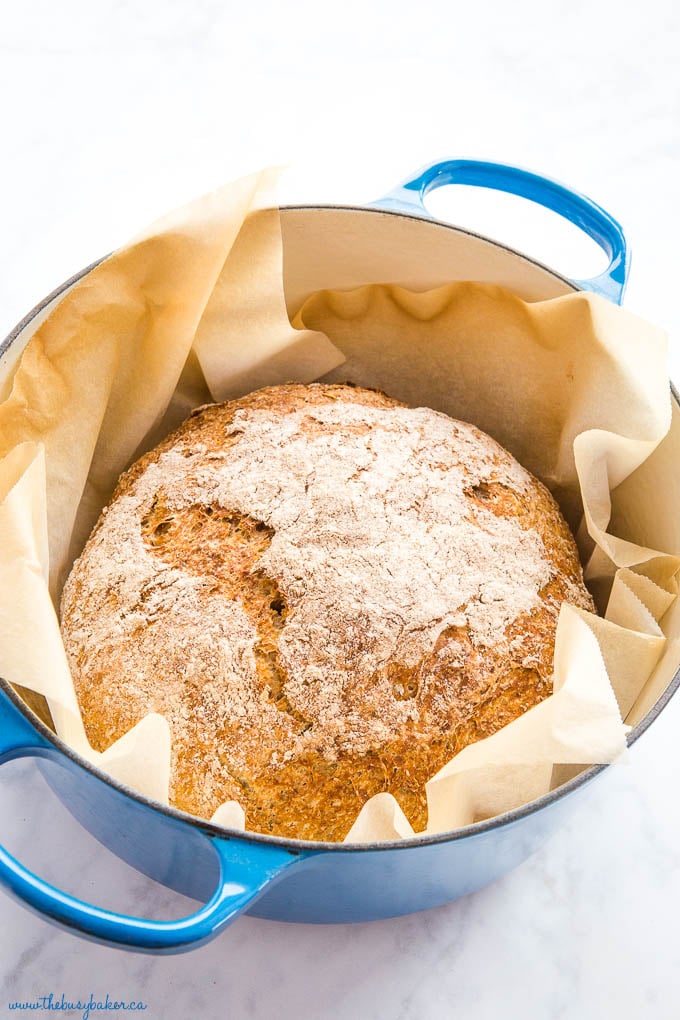
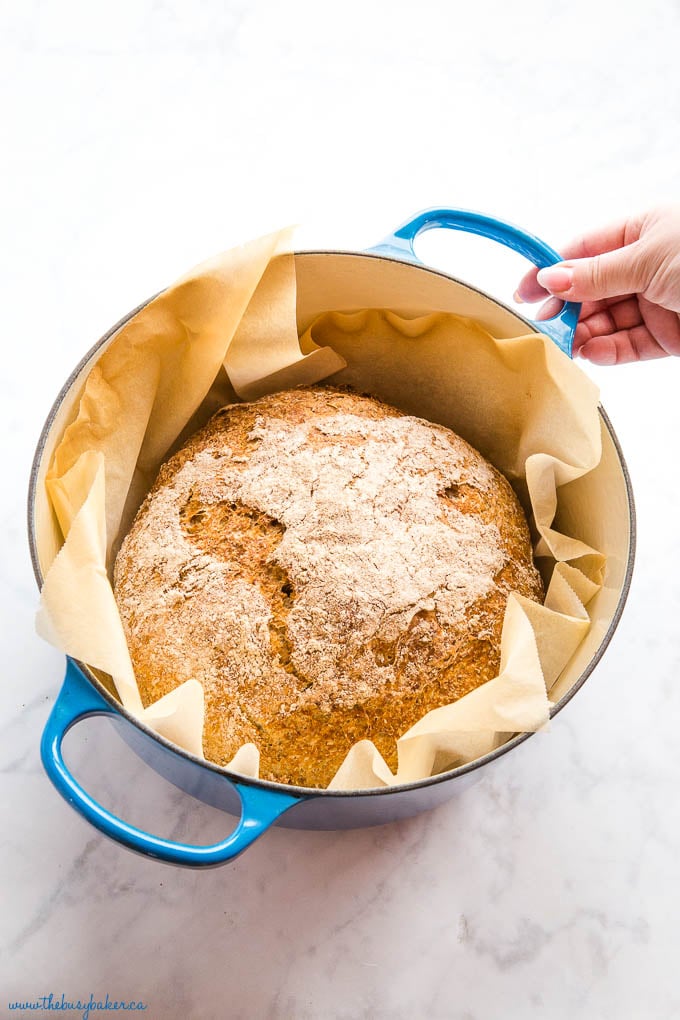
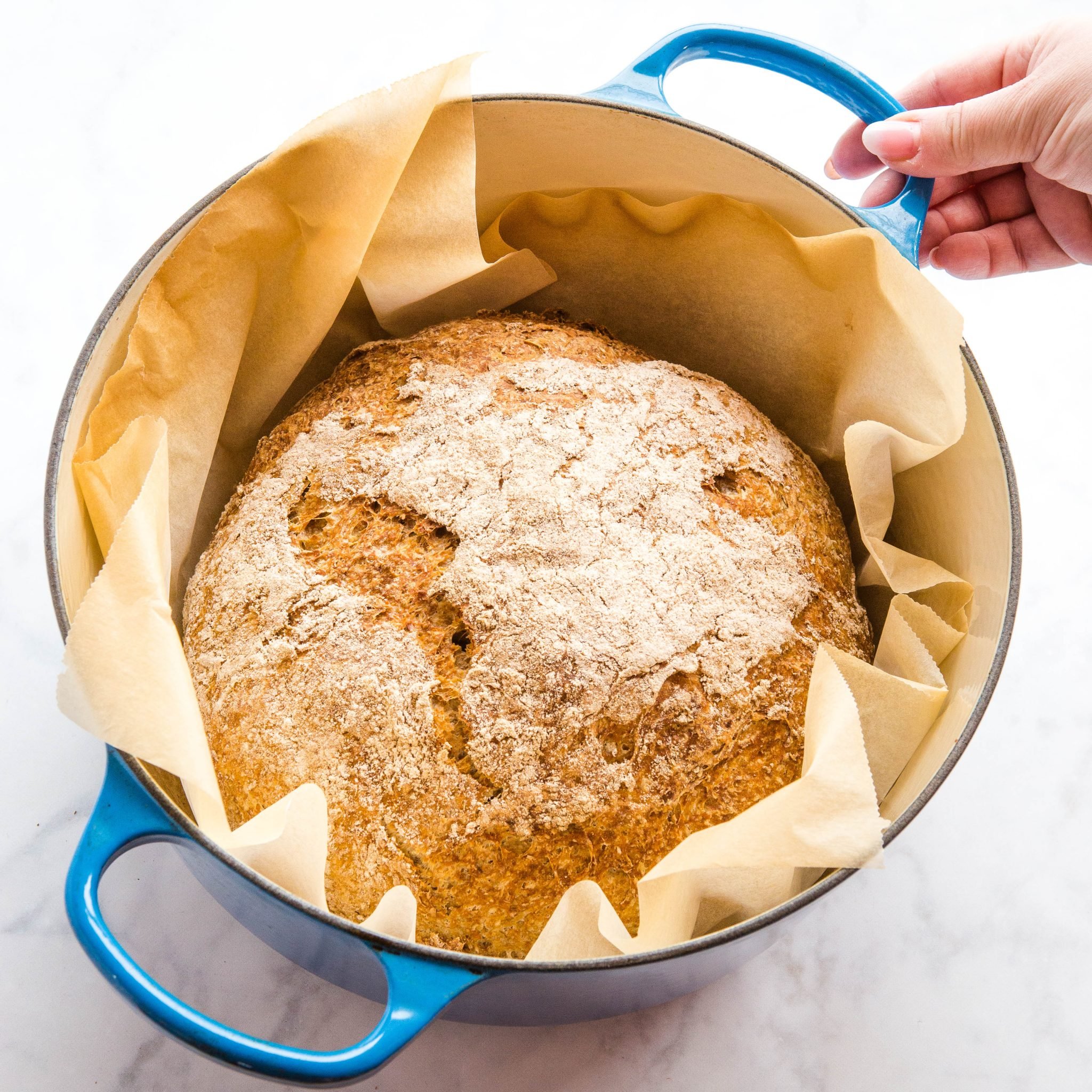
When it comes to making homemade bread, homemade soups, stews and more, nothing works better than a good old enamelled cast iron pot. We have a few cast iron dutch ovens from different brands and we have come to love each of them for different reasons. They’re some of the best investments we’ve made in our kitchen! The first cast iron dutch oven we ever owned was this one from Le Creuset (paid link) and we use it at least weekly throughout the entire year for soups, stews, sauces, curries, and of course for baking bread (if you want my original Dutch Oven Crusty Bread recipe, find it HERE!).
A pot like that one is definitely a financial investment for your kitchen, but considering how much we use ours and considering its high quality, it’s definitely a worthy investment. We’ve also used similar cast iron pots from other brands, like THIS ONE from KitchenAid and THIS ONE from Lodge Cast Iron and even THIS ONE from Amazon Basics (all paid links) if you’re looking for something a little less expensive but still high quality that will work just as well. But our favourite brand of cast iron dutch ovens right now is Denby, and the cast iron Dutch Oven pot we used in this recipe can be found HERE (paid link). Their pots are very high quality (in fact, they outperform some of the higher-priced brands!) and their price point is very reasonable.
Time needed: 2 hours and 10 minutes
- Mix until a rough dough forms.
Stir the ingredients together until no dry flour remains. The dough will look shaggy and slightly sticky, which is exactly what you want.
- Let time do the work.
Cover the bowl and let the dough rise undisturbed. During this time, the flour absorbs the water and develops structure naturally.
- Shape gently.
Turn the dough out onto a lightly floured surface and shape it lightly. Avoid pressing it down too much so you keep as much air as possible inside.
- Preheat your pot.
A hot, covered pot is the key to a crispy crust, so be sure to preheat your Dutch oven pot with the oven so it’s nice and hot!
- Bake in a hot oven.
This dough bakes at a very high temperature. The high heat helps the loaf rise quickly and form a crisp crust, especially when it’s baked it a covered pot.
- Cool fully before slicing.
Allow the bread to cool fully before cutting into the loaf. This step is essential for the crumb to set properly.
- Use a mix of flours – Combine whole wheat flour with all-purpose flour for a lighter texture while keeping some whole grain flavour.
- Add seeds – Sunflower seeds, flax seeds, or sesame seeds add texture and nutrition.
- Add sweet elements – Honey or molasses pairs beautifully with whole wheat flour and enhances moisture.
- Add herbs – Rosemary, thyme, or garlic add a savoury twist.
- Make it lighter – Use a mix of whole wheat and all-purpose flour for a softer, lighter crumb.
- Make a quick white version – Use all-purpose flour instead of whole wheat for a lighter, classic no knead loaf. Try my classic No Knead Bread for an all white-flour version.
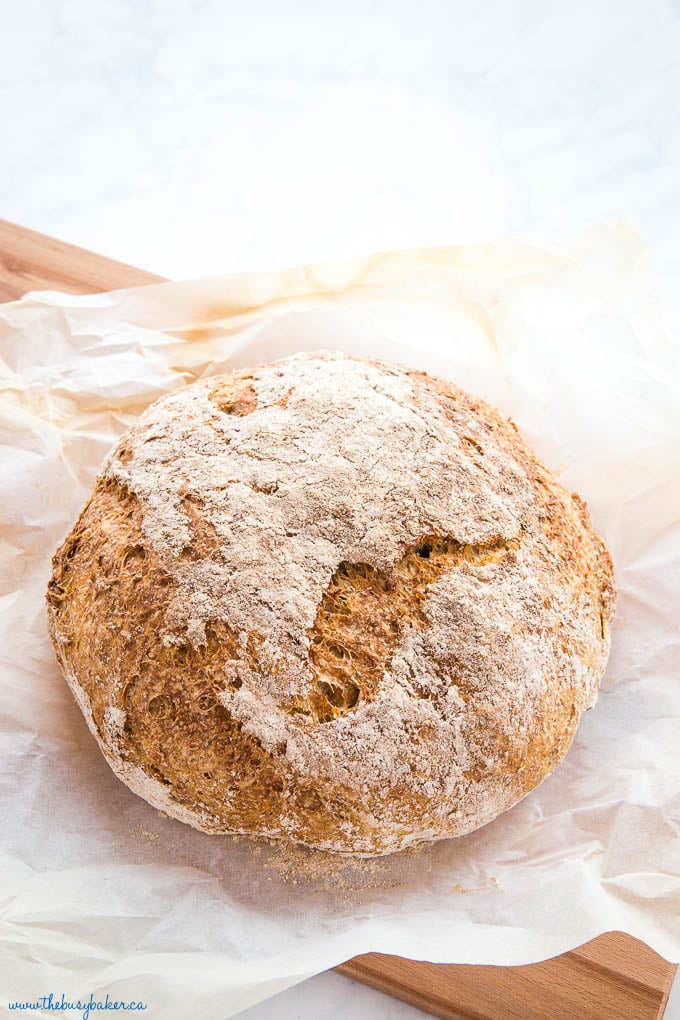
- Room temperature – Store loosely covered for up to 2-3 days.
- Freezer – Wrap tightly and freeze for up to 3 months.
- Reheat – Warm in the oven to refresh the crust and texture.
Why is whole wheat bread heavier than white bread?
The bran in whole wheat flour interferes with gluten development, creating a denser crumb that white bread.
Can beginners make this recipe?
Yes. No knead bread is one of the easiest ways to start baking bread at home!
Do I need a Dutch oven?
For this recipe you’ll need any kind of covered pot that’s oven-safe and deep enough for the bread to rise up as it bakes.
Can I let it rise overnight?
Yes. A longer rise will improve flavour and texture. I recommend reducing the yeast to 3/4 tsp if you do an overnight rise.
Can I shorten the rise time even more?
A full rise is important for the texture of the bread after it bakes. Reducing it too much will affect the final result. The bread may be dry and crumbly or even gummy on the inside if it doesn’t have the chance to rise properly.
EASY NO-FAIL HOMEMADE BREAD RECIPES AND BAKING TIPS
Get my easy no-fail bread baking e-cookbook!

More Easy Bread Recipes
- Potato Bread
- No-Knead Cranberry Walnut Bread with Honey
- Easy Sandwich Bread
- Easy Whole Grain Sandwich Bread
- Quick No Knead Bread
- No Knead Honey Oat Artisan Bread
- No Knead Jalapeno Cheese Artisan Bread
- Easy Homemade Naan Bread
If you made this, share a photo!
Are you trying this recipe? Use the comment form below to share your take; now with support for image uploads and comment voting!
No Knead Whole Wheat Bread
Recipe: Equipment
Recipe: Ingredients
- 4 cups whole wheat flour
- 2 1/4 teaspoons active dry yeast
- 1 1/2 teaspoons salt
- 2 cups warm water
- more flour for shaping the loaf
Recipe: Instructions
- Start with a large bowl and a wooden spoon, and add your flour to the bowl. Measure the yeast and add it to one side of the bowl. Measure the salt and add it to the other side.
- Using a wooden spoon, stir the yeast into the flour on its side of the bowl first and then stir the salt into the flour on its side of the bowl. This will prevent the salt mixing directly with the yeast. Give the whole mixture a few good stirs to make sure everything is combined.
- Measure the water. Make sure the water is at room temperature; water that is too warm or too cold can kill the yeast and prevent the bread from rising at all.
- Pour the water in and stir with a wooden spoon. The dough will be rough and a bit sticky, but that's normal.
- Stir until all the flour is combined. This is not normal bread dough (there's no kneading involved in this recipe), so you don't need to be too concerned about the appearance of the dough at this point. Just make sure the ingredients are combined well.
- Cover the bowl with plastic wrap. It's a good idea to ensure there's adequate space left in the bowl for the dough to at least double in size. Place the bowl in a warm, draft-free place and let it rise for about 1 and a half to 2 hours.
- After the dough has risen, preheat your oven to 450 degrees Fahrenheit. Place your Dutch oven with the lid on in the cold oven and let it heat up with the oven. If your dutch oven is black on the inside, set your oven to 425 degrees Fahrenheit instead of 450.
- Place a piece of parchment paper on the counter and dust it with flour. Rub flour on your hands and scrape the dough away from the sides of the bowl, gathering it in your hands as best you can (it may feel kind of strange and not at all like regular bread dough) and forming it into a circular loaf on the parchment paper. Don't worry if it still looks a little rough in places. This lends to the rustic look of this loaf.
- Once you have it shaped, the dough needs to undergo a short second rise. The goal is to handle the dough as little as possible at this stage because any amount of tugging at the rough can cause it to deflate after it has undergone its second rise. The next few steps will help prevent this. But don't worry if it deflates a bit. This bread dough is pretty forgiving.
- Sprinkle flour over the top of the loaf and loosely cover it with plastic wrap or a clean kitchen towel. The flour you sprinkle on top also prevents the plastic wrap or towel from sticking to the dough so when you take it off at the end of the rise, it doesn't disturb the dough and wreck the rustic shape you've created. Let the dough rise for about 30 minutes. Your oven will also be preheating during this time (and so will your pot).
- Remove the preheated pot from the oven and transfer the dough into the pot as carefully as possible by handling only the parchment paper. Place the lid on the pot and return it to the oven for 30 minutes. Don't open the oven during this time, and certainly don't take the lid off the pot; the crispness of the crust develops because of the steam that builds up in the pot during this 30 minutes.
- After 30 minutes have passed, remove the lid from the pot and continue baking for another 10 minutes. After the 10 minutes have passed, remove the pot with bread from the oven and place the bread on a wire rack to cool. You'll probably hear it crackling as it cools – this is normal.
- If you can, resist the urge to cut into the bread until it has pretty much cooled completely. The bread continues to bake on the inside even after it has been removed from the oven and cutting it too early could result in the inside becoming gummy or rubbery.
Recipe: Notes
No Knead Bread Troubleshooting Tips:
- If your dough seems too fluid after the first rise, simply add 1/3 cup of flour to the top of the dough and mix it in, shaping the loaf into a round shape to rise again while the oven pre-heats.
- If your loaf falls or flattens during the second rise, simply re-shape it gently before baking (creating surface tension should prevent the dough from falling).
- Add 1 tablespoon of Vital Wheat Gluten to the dough with the flour to create a very voluminous dough that rises beautifully every single time and isn’t too dense.
- If the bottom crust of your bread burns or becomes too hard or tough, it’s likely that the bottom burner of your oven is too hot OR you’re using a pot that’s black on the inside (these conduct heat more efficiently than one that’s a light colour on the inside). Try lowering your oven temperature by 25 degrees, using the convection setting, or using a different pot that’s light in colour on the inside.
- Use an oven thermometer to make sure your oven temperature is correct. If your oven runs hot, lower the temperature of your oven by 25 degrees to be sure you don’t burn the bread.
Recipe: Nutrition
Notice: Nutrition is auto-calculated, using Spoonacular, for your convenience. Where relevant, we recommend using your own nutrition calculations.
This is my second attempt using this recipe. It’s so simple. The bread is perfect and delicious!
We’re so glad you like it, Vicky!
Can I cut into smaller loaves and bake in aluminum pans instead of cast iron
Yes! Just make sure you shape them in a log so there’s a bit of surface tenssion.
hello, can I add some seeds to the dough ( sunflower, flax, and pumpkin and oats)
Hello, yes, you totally can!
hi! when should the seeds be added in the process?
Hi Callista – you can just add them in when initially mixing the ingredients.
Perfect, I’ll try! Btw this recipe has been my favorite for some time. Really easy and tastes good. Thank you 🙂
Great recipe and tips! What I have done different, I replaced one cup of the whole wheat flour with one cup of strong white bread flour.(In UK I used 3 cups of Dutchy Organic Strong Wholemeal bread flour from Waitrose and 1 cup of Strong White bread flour from M&S). I also couldn’t help myself from kneading the dough before the first rising and I tell you what – it was such a satisfaction. From there I followed your recipe and the result was great. Very difficult to wait for the bread to cool down, but it is worth it! As you can imagine, no time to take photos cause the butter came out and before I knew it everyone had a slice of this wonderful bread. The bread is keeping well – made Monday evening and still have some for toast on Thursday. I like to keep the bread in a clean tea towel (it also helps with the crumbs going everywhere when slicing it). Thank you for the recipe!
Thank you for your feedback! We are happy you enjoyed our recipe.
Fantastic bread, thanks!
We’re so happy you enjoyed it! Thank you for taking the time to leave your feedback!
I just realized the recipe says “warm water”. Same question. What temp should I use?
You can use water about 90 F. If it feels warm to the touch but not hot, you should be fine.
What is the water temperature for this recipe? It says “room temperature”. My room temp is about 60 degrees (winter). That seems too low. Thanks
You can use water up to 90-95 F. If there was an exact temperature needed, it would be specified, however this is a very easy and forgiving recipe, so have fun with it and…happy baking ☺️
Have you tried to make this “whole grain”? Ive been looking for a crusty bread recipe with whole grain not just whole wheat.
Unfortunately we have not tried that, but if you do, please let us know!
Your recipe is lovely! I just bought a much-coveted dutch oven (waited for 2 months before i could justify the purchase, lol) and i just made a perfect first loaf with it using your recipe. Thanks so much for sharing!
Looks yummy! We’re so happy you enjoyed our recipe! Thank you for taking the time to leave your feedback!
I have made several versions of artisan whole wheat bread and this is the best – thank you!
We’re glad you liked it. Thank you for taking the time to leave your feedback!