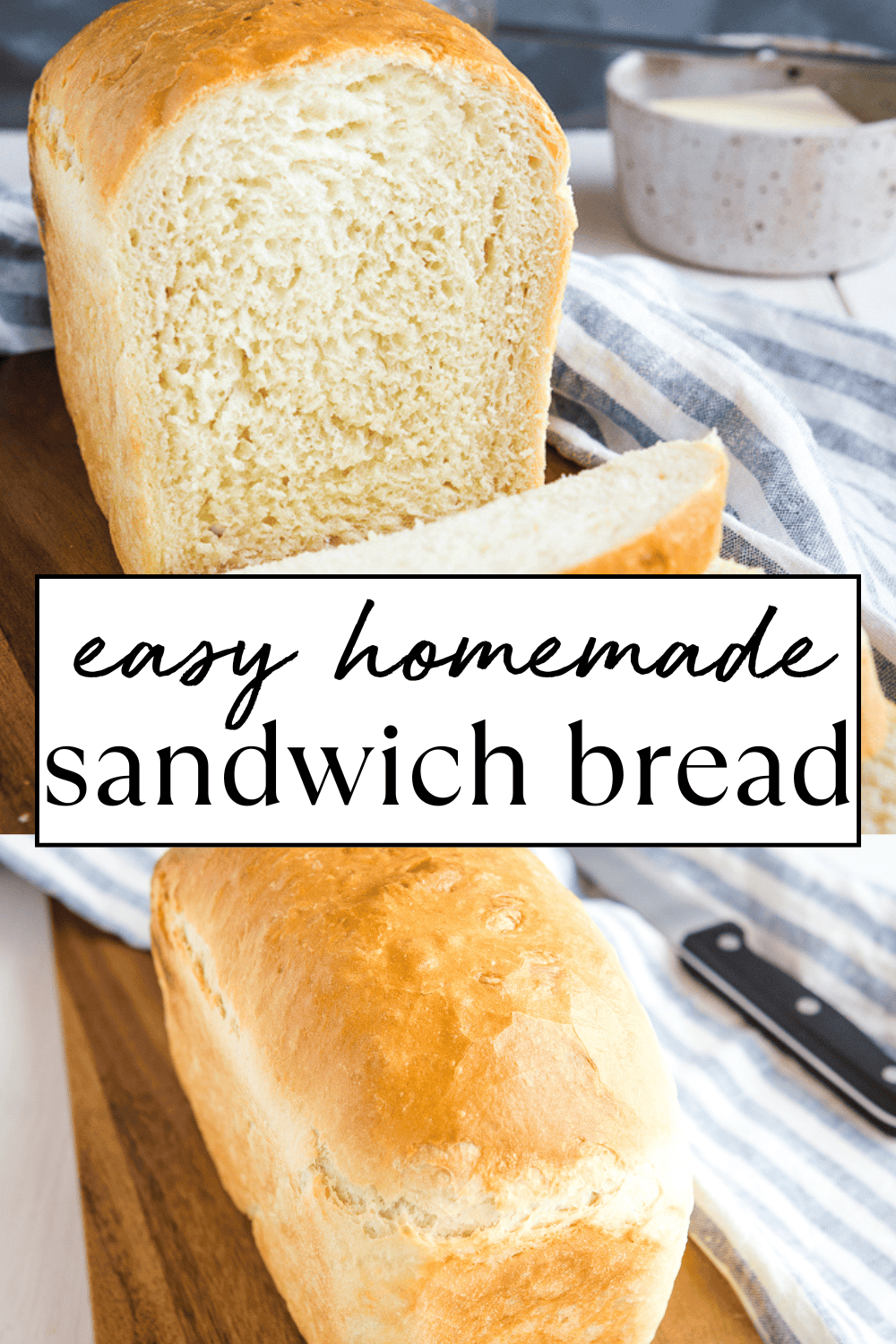
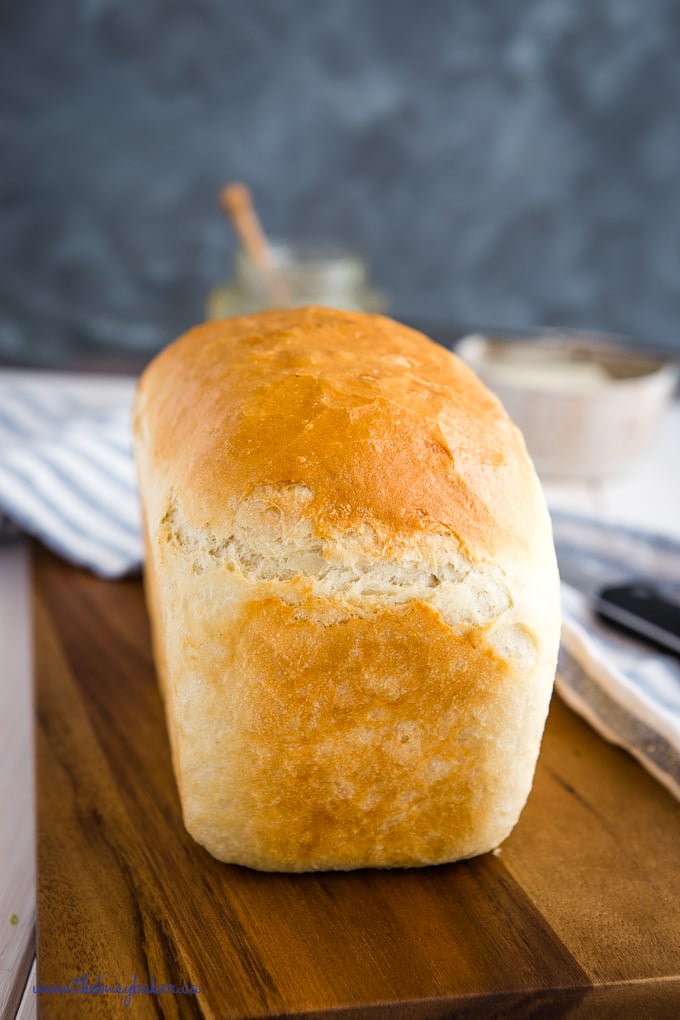
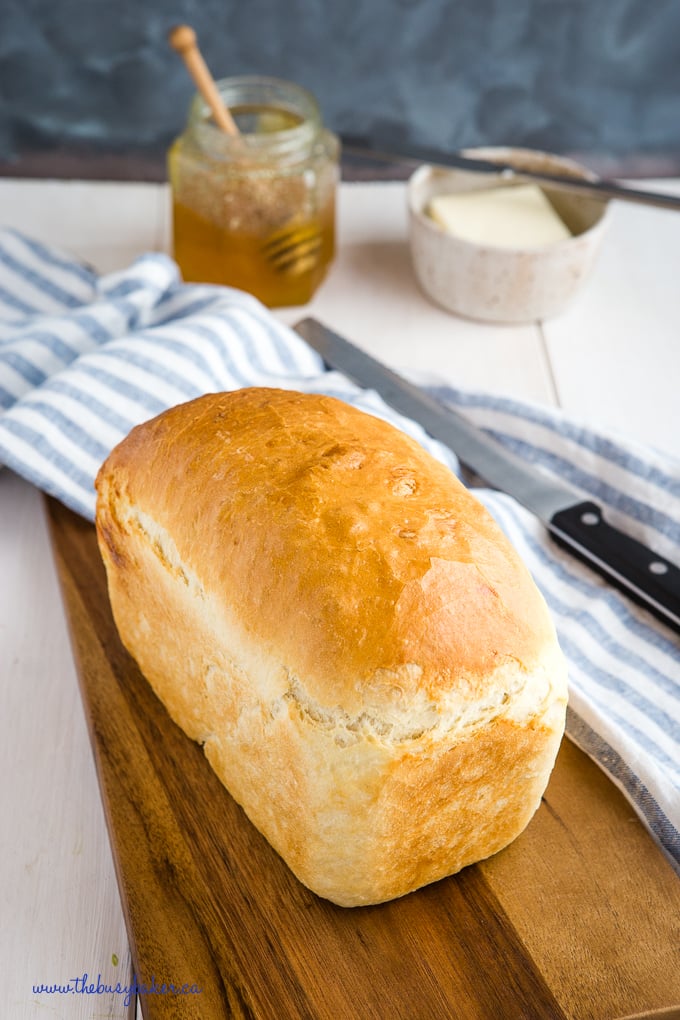
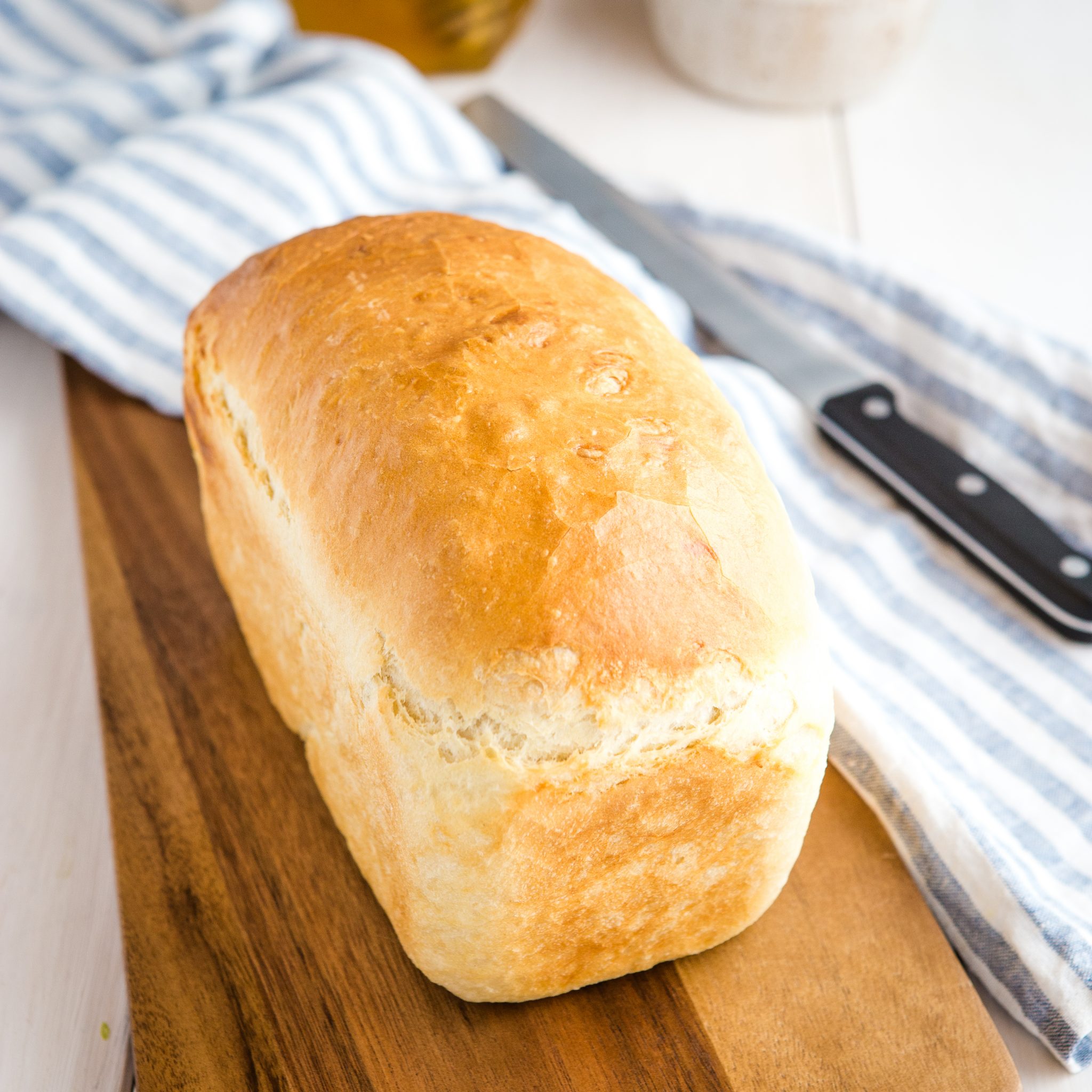
This Easy Sandwich Bread is soft, fluffy, and perfectly sliceable for sandwiches and toast. A simple homemade sandwich bread recipe made with pantry ingredients and easy enough for beginners. It’s perfect for sandwiches or for dipping in soups or stews!
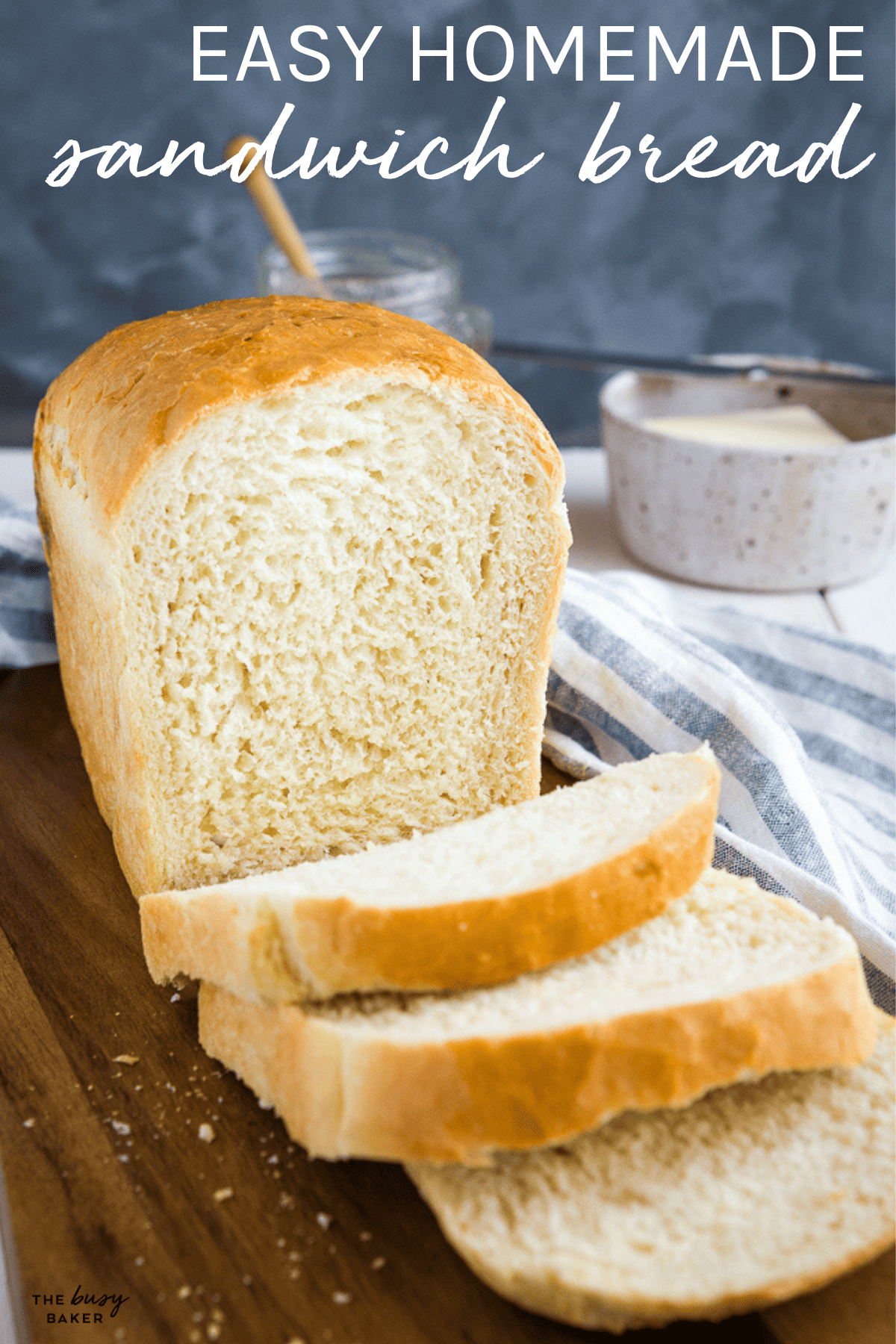
A good loaf of sandwich bread is one of the most useful things you can learn to bake at home. This Easy Sandwich Bread recipe makes the PERFECT soft, fluffy, and structured sandwich bread. It’s great for everyday meals, whether you’re making toast in the morning for breakfast before work, packing school lunches, or serving slices alongside soup or pasta. It has a tender crumb, a light golden crust, and slices beautifully for sandwiches.
What makes this recipe especially great is how easy and approachable it is for beginning bakers. The ingredients are simple pantry staples, the dough is soft and easy to work with, and the results are consistently reliable. This homemade sandwich bread is designed to be softer and more flexible than heartier, crusty artisan loaves so it holds sandwich fillings without tearing and stays tender for days on the counter, so you can use it throughout the week. Once you start baking your own sandwich loaves, it’s hard to go back to store-bought bread!
Looking for more sandwich bread? You’ll LOVE our Whole Wheat Sandwich Bread recipe and our Whole Grain Sandwich Bread recipe!
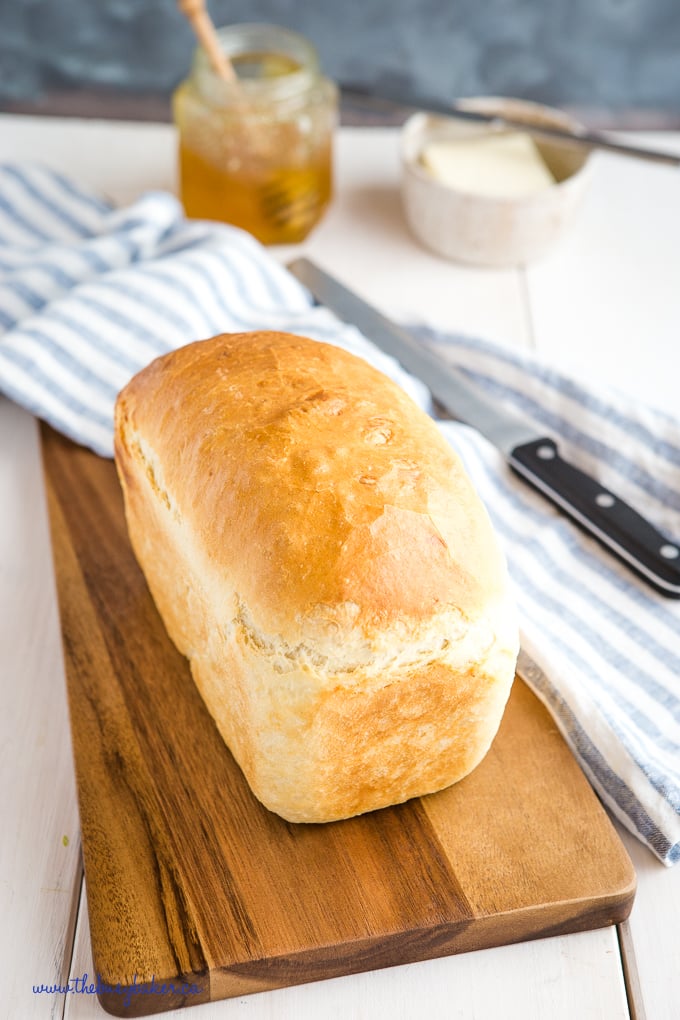
This easy sandwich bread recipe makes a classic soft sandwich loaf because it balances structure and moisture
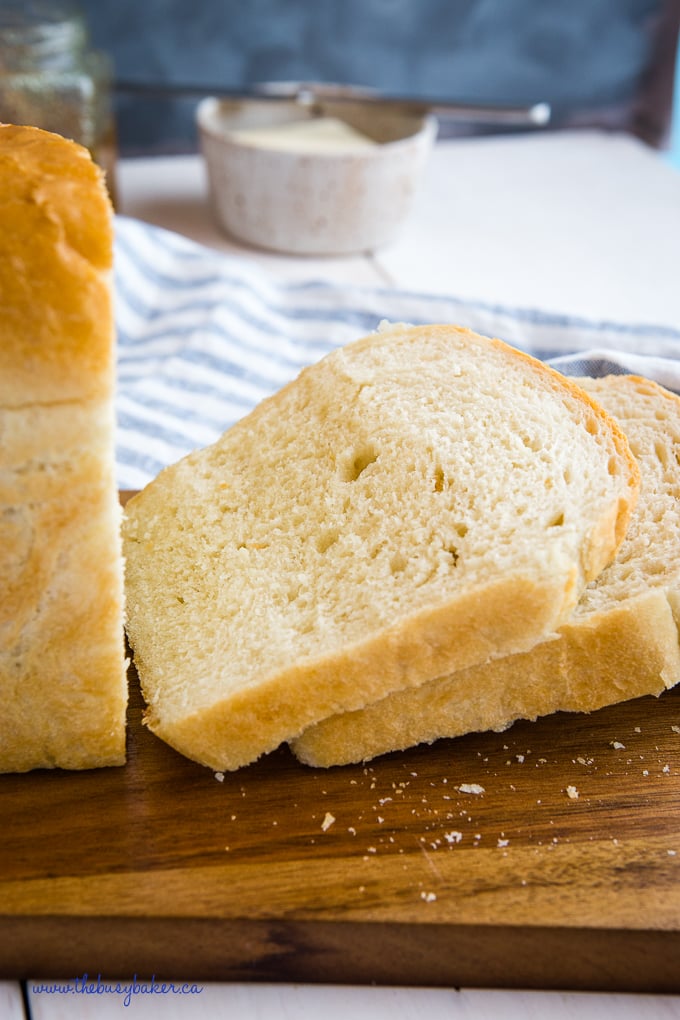
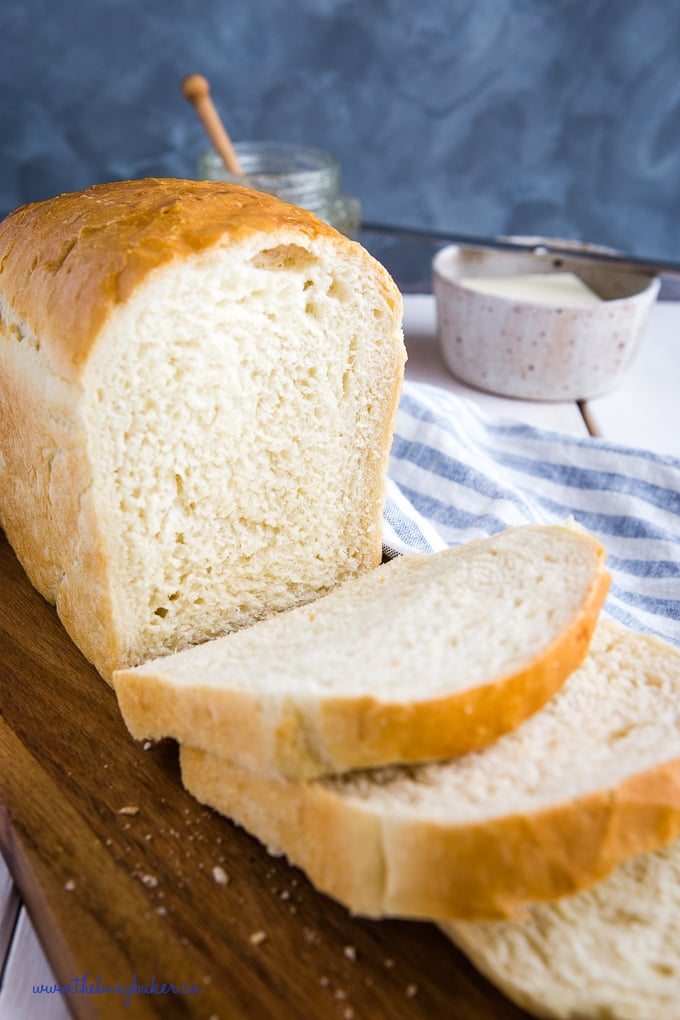
Yeast breads like this one rely on gluten development to create their structure. As the dough is mixed and kneaded, the proteins in flour form a network that traps the gases produced by yeast. This is what helps the dough rise and creates the light, airy crumb filled with those small bubble holes inside the finished loaf.
The hydration level of the dough also plays an important role. A well-balanced dough is soft enough to rise easily but structured enough to hold its shape in a loaf pan. This creates the even-looking crumb texture and soft slices that make sandwich bread ideal for serving as toast and in sandwiches.
The slight sweetness from honey (or sugar) feeds the yeast and helps with browning in the oven as the bread bakes. Combined with proper kneading and rising time, it creates a loaf that’s perfectly tender, evenly textured, very easy to slice, and holds its shape even after slicing. It’s truly an AMAZING homemade sandwich bread in every way!
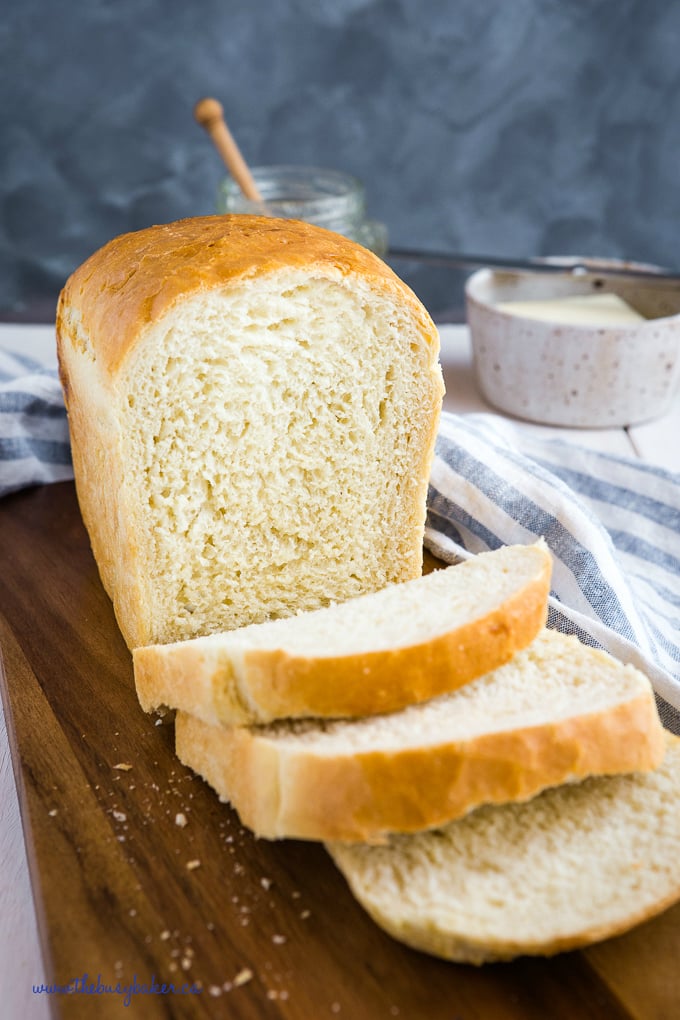
The secret to soft sandwich bread comes down to a few simple principles:
Too much flour is the most common cause of dense, dry bread. Spoon flour into your measuring cup and level it off instead of scooping it directly from the bag or container. Weighing your flour in grams is also a great way to ensure you don’t add too much or too little – aim for 125 grams of flour per cup the recipe calls for.
Warm liquid helps activate yeast, but if the water is too hot it can damage the yeast and prevent the dough from rising. Aim for water that’s just about body temperature.
Bread develops flavour and structure during rising. If the dough hasn’t doubled in size during the first OR the second rise, give it more time.
Proper kneading develops the gluten that gives sandwich bread its soft structure. Most of the time people under-knead homemade bread dough. Use a stand mixer to make it easier, or knead by hand for several minutes until the dough is smooth and very elastic.
The dough should feel soft and slightly tacky. Adding too much flour can make the loaf dry.
Cutting into warm bread releases steam too quickly and can make the crumb gummy. The bread continues to bake after it comes out of the oven so for the BEST texture, let it cool completely before slicing.
Time needed: 2 hours
- Activate the yeast.
Combine the warm water, yeast, and honey or sugar and allow the yeast to dissolve. This step helps ensure the yeast is active before mixing the dough.
- Build the dough.
Add the flour and salt gradually and mix until a soft dough forms. The dough should pull together but remain slightly soft.
- Knead, then knead some more.
Knead the dough until it becomes smooth and elastic. This step strengthens the gluten structure that allows the bread to rise properly.
- Allow the first rise.
Place the dough in a lightly greased bowl and let it rise until doubled in size. This stage develops both flavour and structure.
- Shape the loaf.
Gently shape the dough into a loaf that fits your pan. Shaping helps create an even crumb and consistent slices. Follow the guide provided below for exactly how to shape the perfect sandwich bread loaf.
- Let it rise again.
Allow the shaped loaf to rise until it crowns just above the rim of the pan.
- Bake until golden.
Bake until the loaf is golden brown and sounds hollow when tapped on the bottom.
There’s one trick I always use when making sandwich bread that makes it SO easy to shape the loaves to look just like sandwich bread from a bakery. When you punch down the dough after the first rise, lightly flour your work surface and let the dough rest on the work surface in a ball for about 5-10 minutes. This will allow the gluten in the dough to relax, and it’ll make the dough SO much softer and easier to shape! It’s a simple trick that works every time!
To shape the loaf perfectly for sandwiches, follow these steps:
- After letting it rest, shape the dough into a rectangle (with the short end about the same length as the long side of your loaf pan, and the longer length about 3-4 times the width of your loaf pan).
- Fold one short end into the middle and press with your fingers to seal.
- Fold the other short end into middle and press with your fingers to seal.
- Pinch the sides and pull them in slightly.
- Flip the whole thing over and tuck the ends under again.
- Place the loaf into the greased loaf pan and let rise a second time.
After making homemade bread for so many years I’ve learned that using the right loaf pan makes all the difference. A large, high-sided loaf pan like this one is ideal for sandwich bread (paid link). It’s non-stick, easy to clean, and it has high sides which creates the perfect loaf shape for sandwiches.
- Add whole wheat flour. Substitute up to half of the flour with whole wheat flour for a heartier loaf. Try my favourite Whole Wheat Sandwich Bread for the BEST whole wheat variation on this original recipe.
- Make a cinnamon raisin version. This cinnamon raisin swirl bread is my favourite variation of this easy sandwich bread with a simple cinnamon swirl!
- Add seeds and grains. Sunflower seeds, sesame seeds, or flax seeds add texture and nutrition. Try my favourite Whole Grain Sandwich Bread for a high-fibre version of this orginal recipe.
- Turn it into dinner rolls. Divide the dough into small portions and bake in a baking dish for soft rolls.
At room temperature: Store the loaf wrapped or in a bread bag for up to three days.
Refrigerator: Refrigeration can dry bread out, so room temperature storage is usually best.
Freezer: Slice the bread first, then freeze slices in a sealed bag for up to three months.
Reheating: Frozen slices can go straight into the toaster.
Why didn’t my bread dough rise?
Your yeast may have been expired, or the liquid may have been too hot and damaged the yeast, preventing it from rising.
Why is my sandwich bread dense?
Dense bread usually happens when you add too much flour or don’t knead it long enough.
Can I make this bread without a stand mixer?
Yes. The dough can easily be kneaded by hand.
Can I let the dough rise overnight?
Yes, but be sure to rise the dough in the fridge only for the first rise. A slower rise in the refrigerator can improve flavour, but rising the loaves in the fridge once you’ve formed them can cause the loaves to be misshapen with large holes throughout.
Why is my crust too hard?
Over-baking at too high a temperature or baking too long can create a thicker, harder crust. To soften the crust, brush with a little melted butter right after baking.
What pan size should I use?
A standard 2-pound loaf pan works best for sandwich bread to create even slices.
Why did my loaf collapse in the oven?
This usually means the dough rose too long before baking. Over-proofed dough loses strength and collapses.
Why is my bread gummy inside?
The bread may have been sliced too soon or slightly underbaked. Always allow the loaf to cool completely before cutting.
Watch the video below to see exactly how I make this recipe. You can find more delicious recipe videos on my YouTube channel
If you made this, share a photo!
Are you trying this recipe? Use the comment form below to share your take; now with support for image uploads and comment voting!
Easy Sandwich Bread
Recipe: Equipment
Recipe: Ingredients
- 2 1/2 cups lukewarm water
- 1 tablespoon instant yeast (or use active dry yeast)
- 1 tablespoon honey or other vegan honey substitute, or sugar
- 6 1/4 cups all purpose flour
- 1 teaspoon salt
Egg Wash (optional):
- 1 egg
- 1 tablespoon water
Recipe: Instructions
- Add the water, yeast, and honey to the bowl of your stand mixer and mix with a fork just until the yeast is moistened and the honey is dissolved.
- Let sit for about 4-5 minutes.
- Add the flour to the bowl of the stand mixer on top of the water and yeast mixture and then add the salt.
- Turn the mixer on low speed and mix until a soft dough forms.
- Continue mixing on medium-low speed and let the mixer knead the dough for about 4 minutes. The dough should have formed a soft ball and the sides of the bow should be clean. Only if the dough is too wet and sticking to the side of the bowl, add a tablespoon or two more flour as it kneads.
- Shape the dough with your hands into a ball and place it back into the bowl (oil the bowl, if you wish). Cover the bowl with plastic wrap and let rise for 60 minutes in a warm, draft-free place.
- Grease 2 loaf pans with butter or a high-quality non-stick baking spray.
- After the dough rises, punch it down and turn it out onto a floured work surface and divide it in half.
- Roll each piece of dough into a ball with your hands, eventually shaping it into an oblong round shape.
- Place each piece of dough into one of the greased loaf pans and cover the pans with a clean kitchen towel.
- Let them rise again in a warm, draft-free place for about 20 minutes.
- Preheat your oven to 400℉ (200℃).
- Whisk together the egg and water to make the egg wash (if using).
- Brush the egg wash over the tops of the loaves and bake at 400℉ (200℃) for about 25-35 minutes, until the tops of the loaves are a deep golden brown colour.
- After baking, remove from the pans and place the loaves on a wire rack to cool completely.
- Slice after the loaves have cooled completely to room temperature and use to make your favourite sandwiches or serve alongside soups or stews.
Recipe: Notes
To shape the loaf perfectly for sandwiches, follow these steps:
- After letting it rest, shape the dough into a rectangle (with the short end about the same length as the long side of your loaf pan).
- Fold one short end into the middle and press with your fingers to seal.
- Fold the other short end into middle and press with your fingers to seal.
- Pinch the sides and pull them in slightly.
- Flip the whole thing over and tuck the ends under again.
- Place the loaf into the greased loaf pan and let rise a second time.
Recipe: Nutrition
Notice: Nutrition is auto-calculated, using Spoonacular, for your convenience. Where relevant, we recommend using your own nutrition calculations.
EASY NO-FAIL HOMEMADE BREAD RECIPES AND BAKING TIPS
Get my easy no-fail bread baking e-cookbook!
FINALLY! I have tried so many sandwich bread recipes and they never turn out how I want them to. I LOVE this recipe. My loaves turned out perfect and it is such an easy recipe. Thank you!!
Thank you for taking the time to leave your feedback! We’re happy to hear that you enjoyed our recipe.
If using the dry active yeast option, should I bloom the yeast first?
Step one and two have you blooming the yeast, so yes!
First time I made this bread it was a brick. My fault!! I was using bread flour and added too much flour. I made some adjustments and the second time, beautiful bread! I will be making this bread again. Might tweak the flour a little more. Thanks for the recipe. Going to look at maybe some half white half wheat ones as well.
We’re glad you worked it out and you’re enjoying our recipe ☺️
This was such a simple recipe! I loved it! Is there a way to adapt this using whole wheat flour?
We’re so glad to hear you liked our recipe. If you want to make sandwich bread with whole wheat flour you can try https://thebusybaker.ca/everyday-whole-grain-bread/ or https://thebusybaker.ca/easy-whole-wheat-sandwich-bread/ Let us know how it works out for you!
soooo good and easy to hand knead. Even tastes great plain. I used bread flour instead of AP flour. had a nice thew to it
Thank you for your feedback!
Made this pretty quickly and it turned out great!!
Thank you for sharing
Your bread is awesome!!
Question: once frozen what is the best method for thawing and using?
How long is the loaf good for?
The loaf is good for 4-5 days at room temp or up to 10 in the fridge. After freezing I usually just put it out on the counter the night before or even pop it in the toaster right after taking it out of the freezer.
Accidentally lost the recipe for a minute, and thought I remembered 4tbsp. of honey. Added too much honey, but it was delicious. Our two loaves were gone in 2 days. We didn’t even have to store them they disappeared so quickly. Trying again now with a smaller amount of honey.
We’re so happy you enjoyed them! Thank you for taking the time to leave your feedback!
Hello, I’m a little confused…in the recipe, you say the 2nd rise is around 20 minutes, but in the video, you say to let rise for 10 minutes. Can you please clarify, and FYI I am making sandwich bread so not sure if that makes a difference. Thanks in advance!
There’s an error in the video, thanks for pointing it out to us! You can raise it for 20 minutes.
What can I use instead of honey with the yeast? I’m allergic to honey so that’s not an option for me.
Feel free to use sugar!
I am just trying this bread out for the first time. I put in the flour as per recipe but my dough was very heavy ball and not looking like yours. I have found other recipes if they provide grams and cups seem to measure quite differently where I am. Do you happen to know the grams weight you use for flour? Thank you.
Right under the ingredients list there’s a button that says “metric”. If you click on that, all the measurements will automatically convert to the metric system. We use 750 gr of flour. Hope this helps!
I can’t give a true rating because mine did not turn out but I think it was my yeast. it was jut two very flat loaves. I haven’t baked this summer because of the heat & I think it got old (my yeast that is). I’ve ordered new yeast & I will try again & let you know.
Let us know how it turns out!
Do I use the dough hook attachment for the entire process on the electric mixer?
Yes!
Great recipe! I love the texture and taste but like others, there’s not enough dough volume to crest the lip of my loaf pans, and I’ve made this twice – the second time with newly purchased yeast. Checking the images in the recipe again, my loaf pans appear a bit wider than yours. I’m planning to increase the quantities to 1000g flour, 833g water, 1.3 tbsp yeast, 1.3 tbsp honey, and 1.3 tsp salt for two US standard loaf pan for the next batch.
I would suggest you don’t change the recipe but use a narrow(and taller) loaf pan that is just perfect for the best sandwich bread. We use a pan just like this one https://www.amazon.com/Zyliss-E980199-Non-Stick-Dishwasher-Guarantee/dp/B09HJCVPRJ?crid=3DCWD245KNSIN&keywords=high%2Bsided%2Bloaf%2Bpan&qid=1666700191&qu=eyJxc2MiOiIxLjUwIiwicXNhIjoiMC44MSIsInFzcCI6IjAuMDAifQ%3D%3D&sprefix=high%2Bsided%2Bloaf%2Bpan%2Caps%2C232&sr=8-7&th=1&linkCode=sl1&tag=thbuba02-20&linkId=5c0ee8110bb852176abca9f0a1b6bab9&language=en_US&ref_=as_li_ss_tl (affiliate link). Hope this helps ☺️
Hello! Can I use bread flour with this recipe? Spoiler alert… I already did and am just doing my first rise. The dough seemed a lot drier than yours, could I have added more water after kneading for the 4 minutes?
In this recipe AP flour and bread flour can be used interchangeably. Yes, you can add a bit more water. Hope this helps. Happy baking! Let us know how it turns out.
I should add that I have experimented with different flours – multigrain, whole wheat and even rye – substituting one or two cups.
I make this recipe in my bread machine on the dough cycle and then take it out, let it rest for a few minutes and then shape it into a bread pan, let it rise again (about 35 to 40 minutes) and bake for 30 minutes at 350 or until a thermometer reads 200 degrees Fahrenheit. Comes out great every time. I find that the second rising needs more time or crumb in the final product has holes.
I’m so happy you enjoyed it! Thank you for taking the time to leave your feedback!
There is no shortening, or oil in this bread recipe am I missing something
Nope, you’re not missing anything. Our recipe doesn’t call for any oil or shortening.
This was a great recipe. I needed to let my loaves rise a little longer than the recipe said but it’s lively textured bread
So glad you enjoyed it Gayle! Thanks so much for taking the time to leave a comment! 🙂
After so many not successful attempts and sourdough starter experimenting , I gave up on making bread .
Saw this simple recipe today and I have two perfect loaves !
The secret is in simplicity.
Thanks so much
You’re welcome Katya! Really glad they turned out perfect!