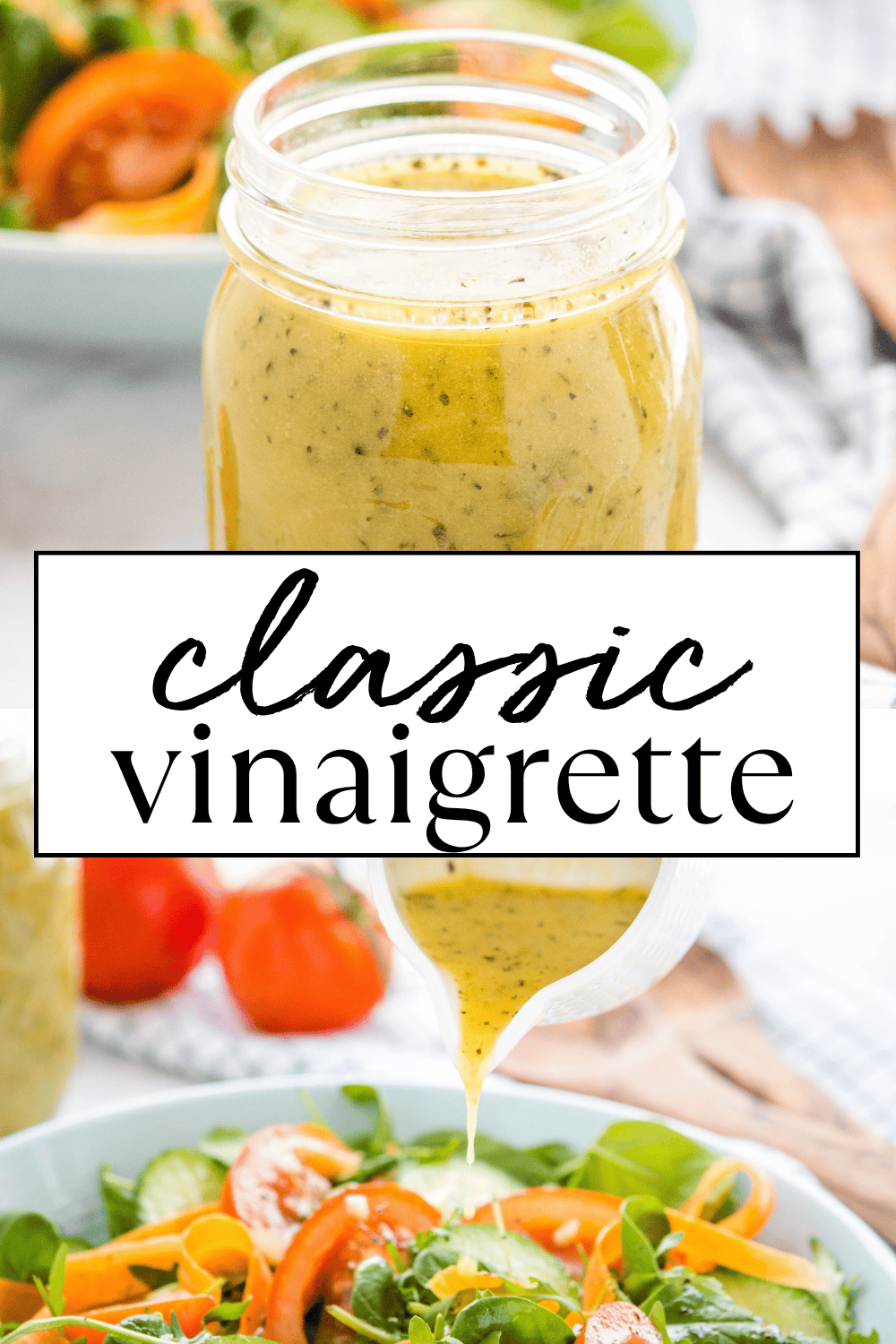
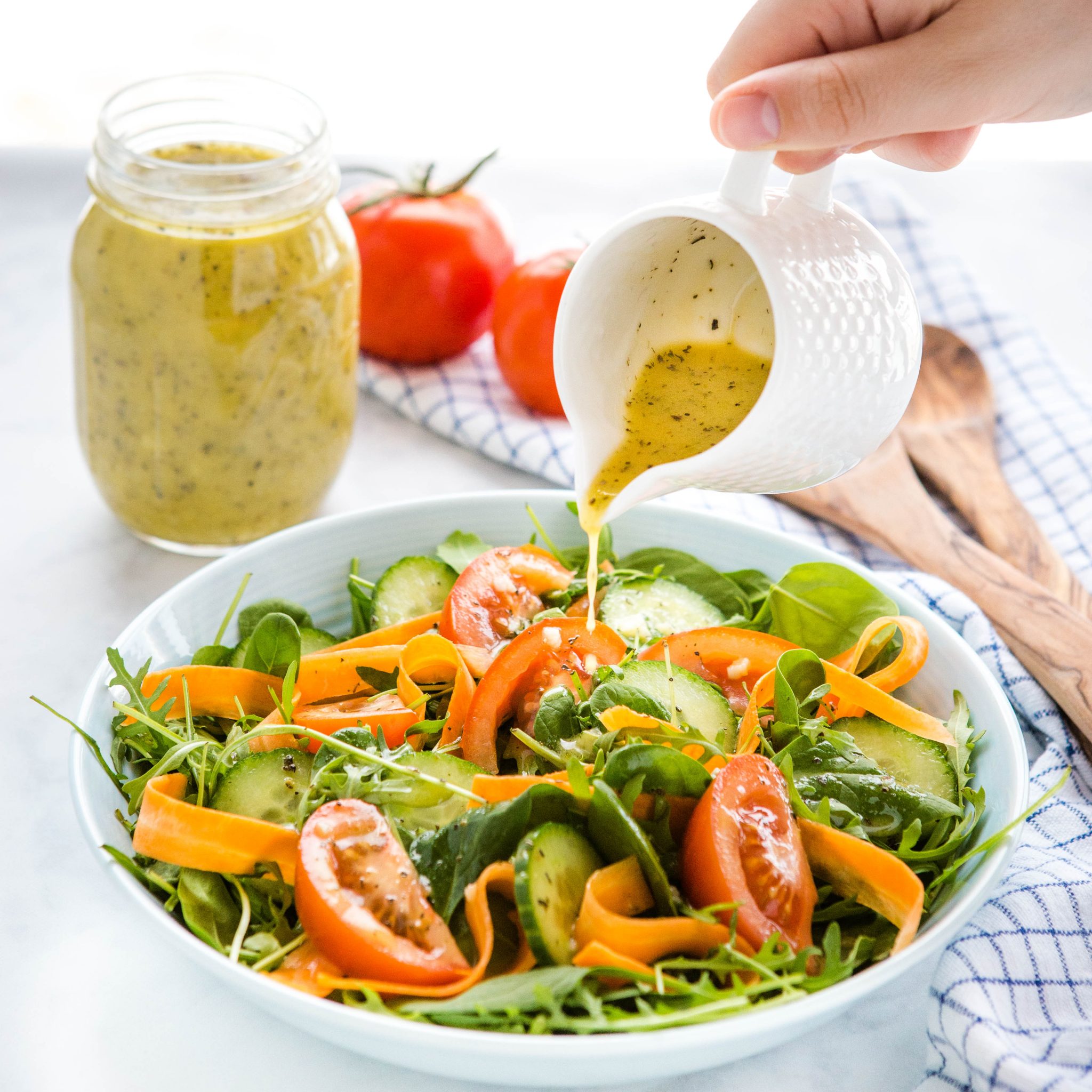
This classic vinaigrette salad dressing is the only homemade salad dressing recipe you’ll ever need! Eight simple pantry ingredients, one mason jar, 10 minutes, and you’ve got a bright-tasting, herby vinaigrette with real garlic and herbs already built in. It’s a thousand times tastier than anything you’ll buy in a bottle, and it’s the foundation for every dressing in your fridge.
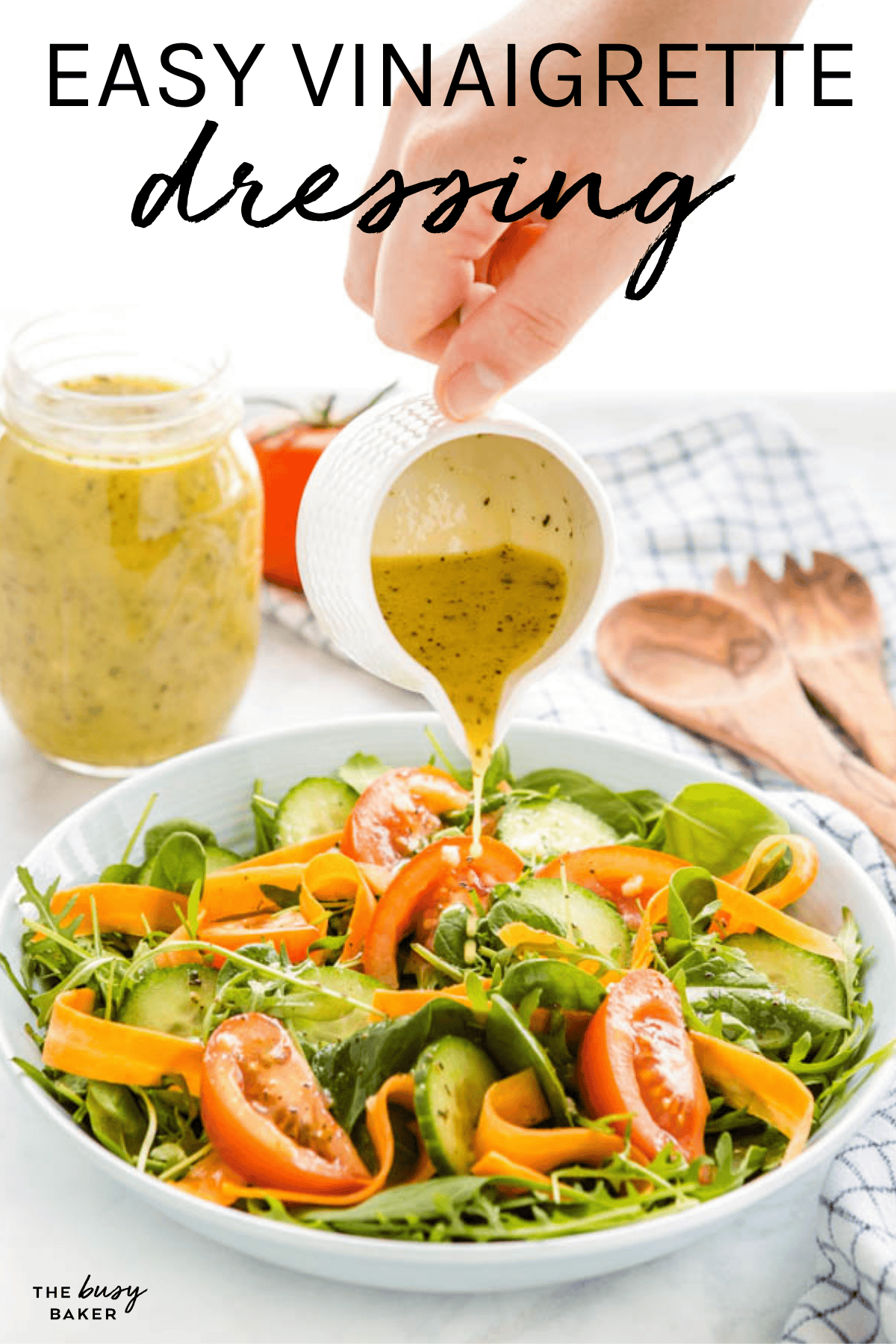
This Classic Vinaigrette is the dressing I make every week in our house. Olive oil, white wine vinegar, Dijon mustard, fresh or dried basil and thyme, a clove of garlic, salt, and pepper. Shake it in a mason jar, drizzle it over a green salad, and you’ll wonder why you ever bought salad dressing at the grocery store. The garlic and herbs are what set it apart from a plain French-style vinaigrette, and once you’ve made it, you’ll be making it on repeat all year long!
This is the recipe I make when there’s a salad on the dinner table, when I’m packing lunches for the week, and when I want a quick marinade for chicken or vegetables. Just one mason jar, one shake, and two weeks in the fridge. Make a fresh jar every Sunday and dressing is ready for every salad you’ll eat throughout the week!
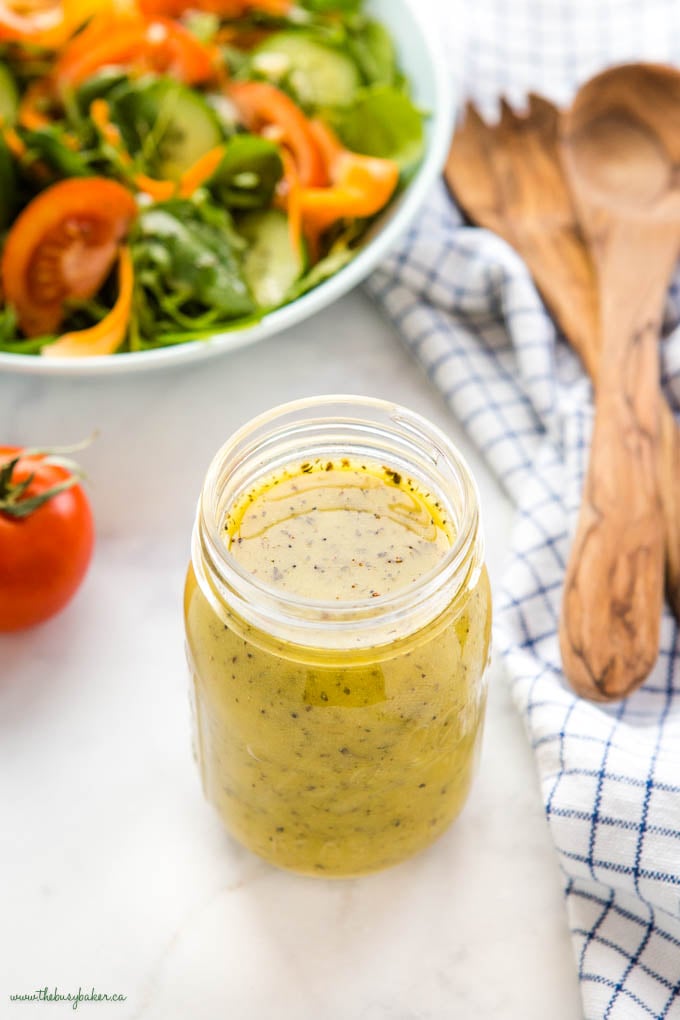
Garlic and herbs do all the work. Most “classic vinaigrettes” stop at oil, vinegar, mustard, salt, and pepper. This one adds garlic, basil, and thyme right into the dressing, which means every bite tastes like a real herbed vinaigrette without you needing to garnish a salad with extra fresh herbs. The garlic mellows in the vinegar after an hour in the fridge, and the basil and thyme infuse the oil with real flavour.
Dijon mustard is the emulsifier. Without Dijon, the oil and vinegar separate the second you stop shaking. Dijon is the magic ingredient that binds them together into a smooth, glossy dressing that clings to every bite.
White wine vinegar is brighter than balsamic. A lot of “classic vinaigrette” recipes default to balsamic, but balsamic is dark and sweet, and can be a little heavy-tasting at times. White wine vinegar (or red wine vinegar as a substitute) is crisper and more versatile, especially for summer. It pairs with every kind of salad — green, vegetable, grain bowl, pasta salad — without overpowering any of them.
The mason jar is your best friend. No whisk, no bowl, no emulsion to watch. Add everything to a clean mason jar, screw the lid on tight, and shake hard for 30 seconds or less. The dressing comes together in less time than it takes to wash a salad bowl, and it’s the same jar you store it in for the week.
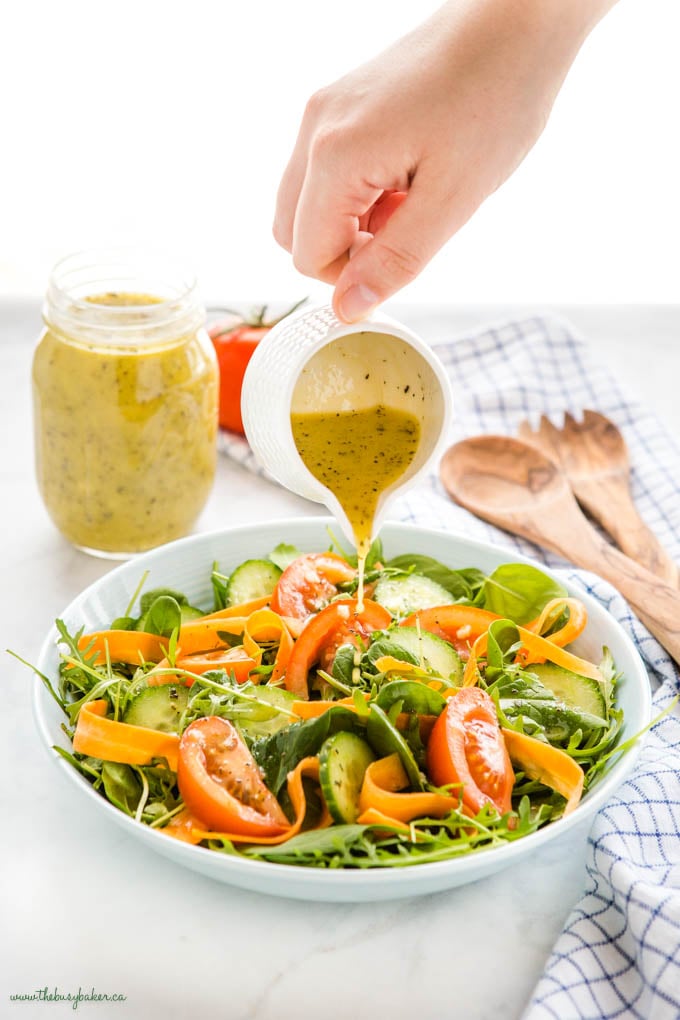
A few small details make the difference between a dressing you’ll make once and one you’ll keep on rotation. These are the PRO tips that matter most.
Both are tasted directly in a vinaigrette, so there’s nowhere for cheap flavours to hide. A fruity extra-virgin olive oil and a real wine vinegar (not the imitation stuff) make a noticeable difference.
Large pieces of raw garlic in a dressing are too sharp-tasting, so be sure to use a garlic press, the back of a knife, or a microplane to crush the garlic into a near-paste. The flavour distributes evenly through the dressing instead of hitting one bite hard.
The recipe calls for dried basil and thyme as the default (because they’re always available and always reliable). If you have fresh basil and thyme from the garden or the produce aisle, swap in 1 tablespoon each of finely minced fresh herbs for the 1 teaspoon dried. Fresh herbs add brightness and visible flecks of green. It’s not a necessary swap but it’s great to do in the summer when herbs are fresh from the garden.
A whisked vinaigrette emulsifies temporarily but separates fast. A shaken vinaigrette in a mason jar (with Dijon as the emulsifier) holds together longer and stays drizzleable for the whole week. Plus you can skip the dirty bowl!
The garlic and herbs benefit from a little time to infuse the oil and vinegar so if you can, make the dressing an hour ahead and pop it in the fridge.
Olive oil solidifies in the fridge, so the dressing looks cloudy and thick when it’s cold. Let the jar sit on the counter for 10 minutes and shake again before using. It’ll be smooth, pourable, and perfect!
Vinaigrette wilts greens fast. If you dress the salad too early, the leaves will go limp and the dressing will pool at the bottom of the bowl. Toss the salad with the dressing right before serving, not more than 20 minutes ahead.
Less is more with a flavourful vinaigrette like this one. Start with less, taste, and add more if needed. You can always add more dressing, but you can’t take it back once you’ve added it!
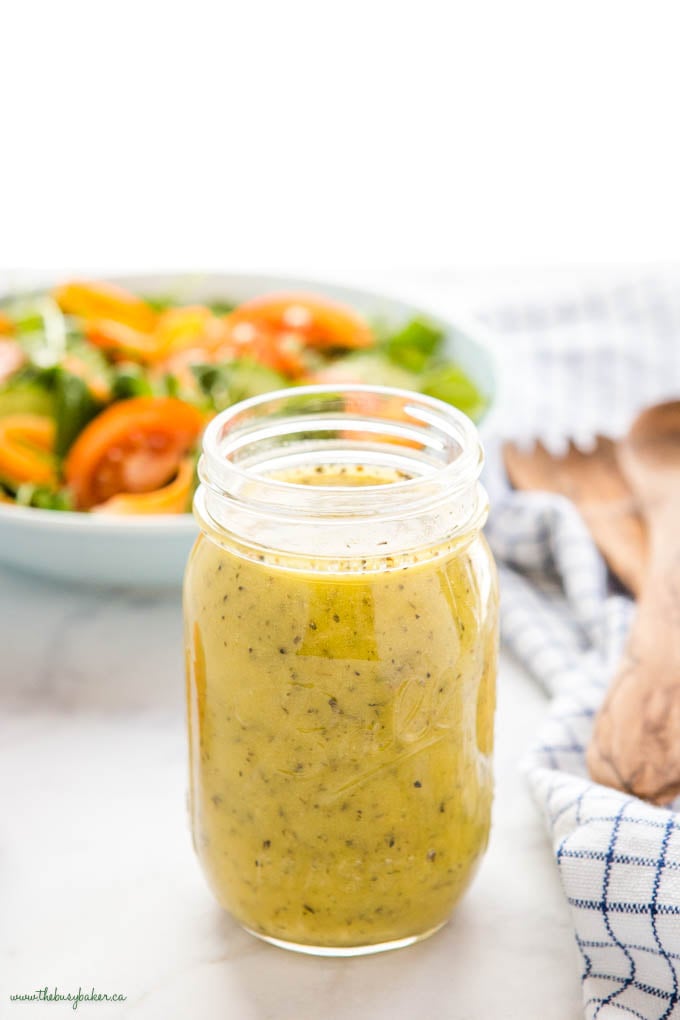
Here’s how the recipe comes together. Total time: 10 minutes from start to finish!
- Add all the ingredients to a mason jar. Use a clean mason jar with a tight-fitting lid. Add all the ingredients to the mason jar at the same time.
- Screw the lid on tight. Make sure the lid is sealed completely before you start shaking.
- Shake until smooth. Shake hard for 30 seconds, until the dressing is smooth, glossy, and emulsified.
- Taste and adjust. Taste the dressing on a leaf of lettuce or a small spoon. Adjust salt and pepper to your preference.
- Serve or store. Drizzle about 2 tablespoons over every 2 cups of salad greens, or store in the fridge in the same mason jar for up to 2 weeks. Shake well before each use.
Here are the variations that turn one mason jar vinaigrette into a whole world of dressings:
- Italian-style vinaigrette. Swap the basil and thyme for 2 teaspoons of Italian seasoning (or a mix of dried oregano, basil, thyme, and rosemary). This adds an extra herb note and pairs beautifully with antipasti, caprese salads, and pasta salads. You can also throw in some finely grated parmesan.
- Greek-style vinaigrette. Swap the white wine vinegar for red wine vinegar, swap the basil and thyme for 2 teaspoons of dried oregano, and add the juice of half a lemon.
- Lemon-herb vinaigrette. Swap half the vinegar (about 3 tablespoons) for fresh lemon juice and add 1 teaspoon of lemon zest.
- Balsamic version. Swap the white wine vinegar for balsamic for a deeper, sweeter dressing. Add 1 teaspoon of honey or maple syrup to balance if you want to match the balsamic’s sweetness.
- Spicy vinaigrette. Add 1/4 teaspoon of red pepper flakes for a little bit of heat. This version is great on grain bowls and roasted vegetables.
- Creamy vinaigrette. Whisk in 1 tablespoon of mayonnaise or full-fat Greek yogurt for a creamier, richer dressing. This version is still vinaigrette-y, just with more flavour and creaminess.
- Honey Lemon Vinaigrette. Swap the white wine vinegar for fresh lemon juice and add 1 tablespoon of honey for a sweeter, brighter dressing. Or try my Honey Lemon Vinaigrette!
- Maple Balsamic Vinaigrette. Swap the white wine vinegar for balsamic and add 1 tablespoon of pure maple syrup for a rich and slightly smoky dressing. Or try my Maple Balsamic Vinaigrette!
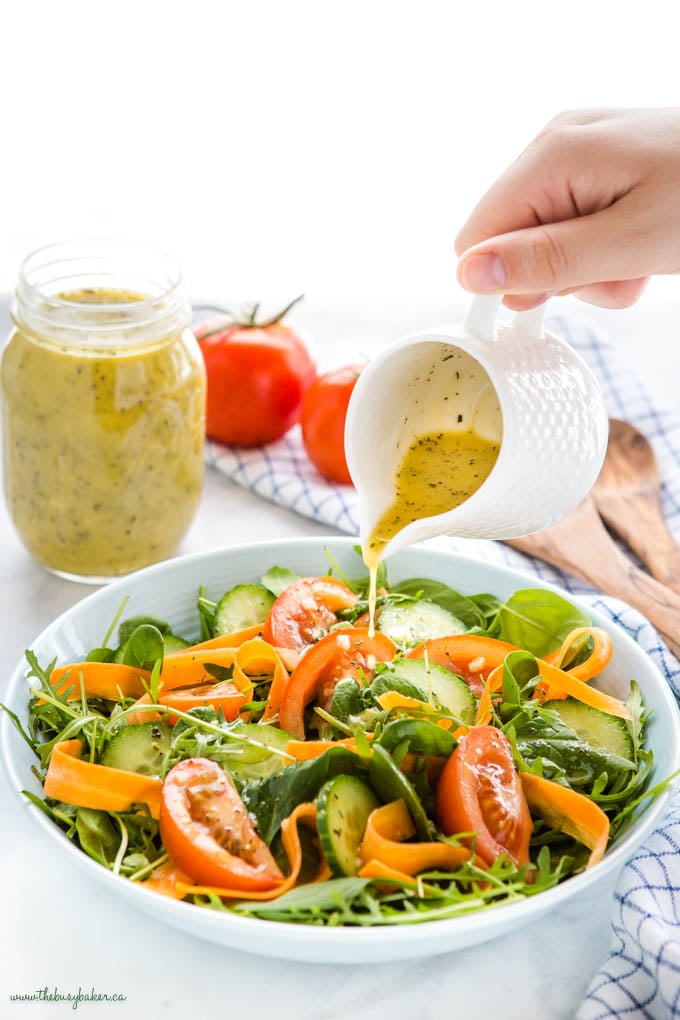
This dressing pairs with just about any salad, but here are my favourite combinations:
- A classic green salad with mixed greens, cherry tomatoes, cucumber, and red onion
- A Mediterranean salad with tomatoes, cucumber, red onion, feta, olives, and basil (try with the Greek-style variation)
- A spinach salad with strawberries, goat cheese, candied pecans, and red onion
- A grain bowl with roasted vegetables, quinoa or farro, and Greek Yogurt Marinated Chicken
- As a marinade for chicken, fish, or grilled vegetables (let sit 30 minutes to 2 hours before cooking)
- Drizzled over roasted carrots, beets, sweet potatoes, or Brussels sprouts
- As a sauce for cold pasta salads or potato salads
- With a slice of warm Easy Homemade Garlic Bread for dipping
This vinaigrette is built to last for the week. Here’s how to keep it fresh:
In the refrigerator – Store in a sealed mason jar in the fridge for up to 2 weeks. Shake well before each use. The olive oil will solidify in the cold, so let the jar sit on the counter for 10 minutes before serving to bring it back to a pourable consistency.
At room temperature – If you’re making the dressing to use the same day, no refrigeration is needed. Just keep it on the counter and shake before serving.
Make-ahead – Make a fresh jar every Sunday and you’ll have dressing for the whole week’s salads. The garlic and herbs taste even better after a day in the fridge to meld.
Freezing – Don’t freeze vinaigrette. Olive oil doesn’t freeze well, and the texture won’t recover after thawing.
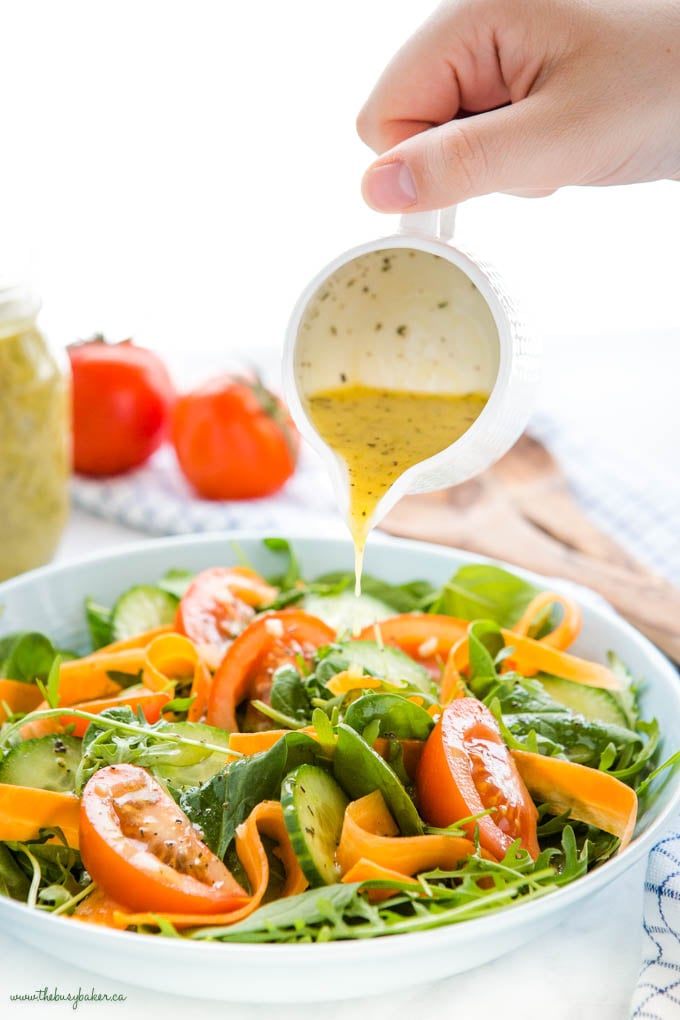
This vinaigrette keeps in the fridge in an airtight jar or container for up to 2 weeks. Shake it well before using it. It’s best if you use it within one week, for the best flavour.
Yes! Two tablespoons of this Classic Vinaigrette contains under 1 gram of carbohydrates and no sugar or sweeteners. Keto-friendly, gluten-free, and dairy-free.
Yes! Blending gives a creamier, more emulsified texture (the garlic gets fully puréed into the dressing). A mason jar works just fine for everyday use; pull out the blender if you want a smoother, more restaurant-style finish.
White wine vinegar is the default in this recipe. Red wine vinegar is a great substitute and gives a slightly sharper edge. Balsamic vinegar works for a sweeter, darker dressing. Avoid distilled white vinegar (it’s too harsh) and apple cider vinegar (it overpowers the herbs).
Yes! Use 1 clove of very finely minced or pressed fresh garlic. If you only have dried, 1/4 teaspoon of garlic powder works in a pinch.
Yes! Dijon is the emulsifier that holds the oil and vinegar together. Without it, your dressing will separate the second you stop shaking. If you don’t have Dijon, you can use regular mustard, but Dijon is the classic choice for flavour.
Vinaigrette is a specific type of salad dressing made by emulsifying oil and vinegar (usually with mustard). All vinaigrettes are salad dressings, but not all salad dressings are vinaigrettes. Creamy dressings like ranch, Caesar, and blue cheese are also salad dressings but not vinaigrettes.
Yes! Swap 1 teaspoon of dried basil and dried thyme for 1 tablespoon each of fresh, finely minced basil and thyme. Fresh herbs add visible green flecks and a brighter flavour.
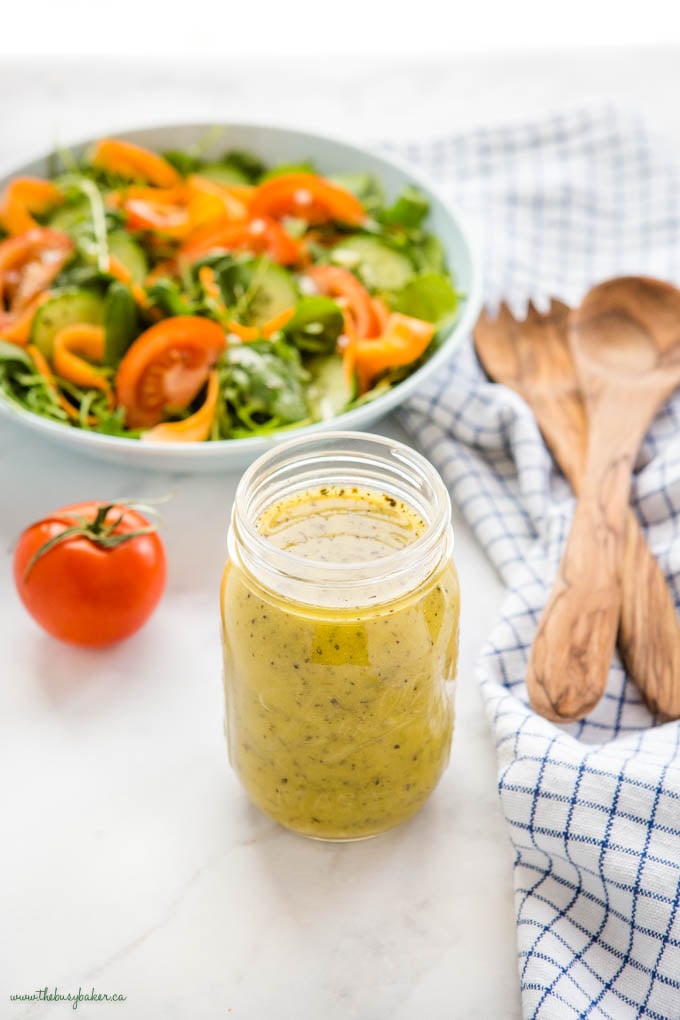

More Easy Salad Dressing Recipes You’ll LOVE
- Honey Lemon Vinaigrette
- Honey Mustard Salad Dressing
- Healthy Raspberry Vinaigrette
- Maple Balsamic Vinaigrette
- Classic Creamy Italian Salad Dressing
- Thousand Island Dressing
- Creamy Cilantro Lime Dressing
- Tahini Dressing
- Blue Cheese Salad Dressing
- Green Goddess Dressing
- Greek Salad Dressing
- Avocado Ranch Dressing
Watch the video below to see exactly how I make this recipe. You can find more delicious recipe videos on my YouTube channel
If you made this, share a photo!
Are you trying this recipe? Use the comment form below to share your take; now with support for image uploads and comment voting!
Classic Vinaigrette Salad Dressing Recipe
Recipe: Equipment
Recipe: Ingredients
- 2/3 cup olive oil
- 7 tablespoons white wine vinegar substitute red wine vinegar, if desired
- 3 teaspoons Dijon mustard
- 1 teaspoon salt
- 1/2 teaspoon black pepper
- 1 clove garlic, very finely minced or use 1/4 teaspoon garlic powder
- 1 teaspoon dried basil (use minced fresh basil, if desired)
- 1 teaspoon dried thyme (use minced fresh thyme, if desired)
Recipe: Instructions
- Add the oil, vinegar, mustard, salt, pepper, garlic, basil, and thyme to a mason jar.
- Add the lid and secure it tightly.
- Shake well until a smooth dressing forms.
- Serve over your favourite green or garden salads, or store in the fridge in a jar or other airtight container until ready to serve.
Recipe: Notes
Recipe: Nutrition
Notice: Nutrition is auto-calculated, using Spoonacular, for your convenience. Where relevant, we recommend using your own nutrition calculations.